
Agentic Ais Transformative Impact Reshapes Software Development And Logistics Demanding Strategic Adaption
Agentic AI: The Architectural Shift Reshaping Software Development and Global Logistics
The emergence of agentic AI represents a fundamental paradigm shift in the digital and physical economy, moving beyond the era of passive Large Language Models (LLMs) into a realm of autonomous, goal-oriented problem solvers. Unlike standard generative AI, which functions as a reactive assistant, agentic AI operates with agency—the capacity to reason, plan, execute, and iterate across complex multi-step workflows without constant human intervention. This evolution is not merely an incremental technological upgrade; it is a structural transformation that is currently re-engineering how software is architected and how global supply chains are managed. For enterprises, the transition to agentic frameworks demands a radical strategic pivot, shifting focus from "human-in-the-loop" productivity tools to "human-on-the-loop" oversight systems.
The Agentic Revolution in Software Development
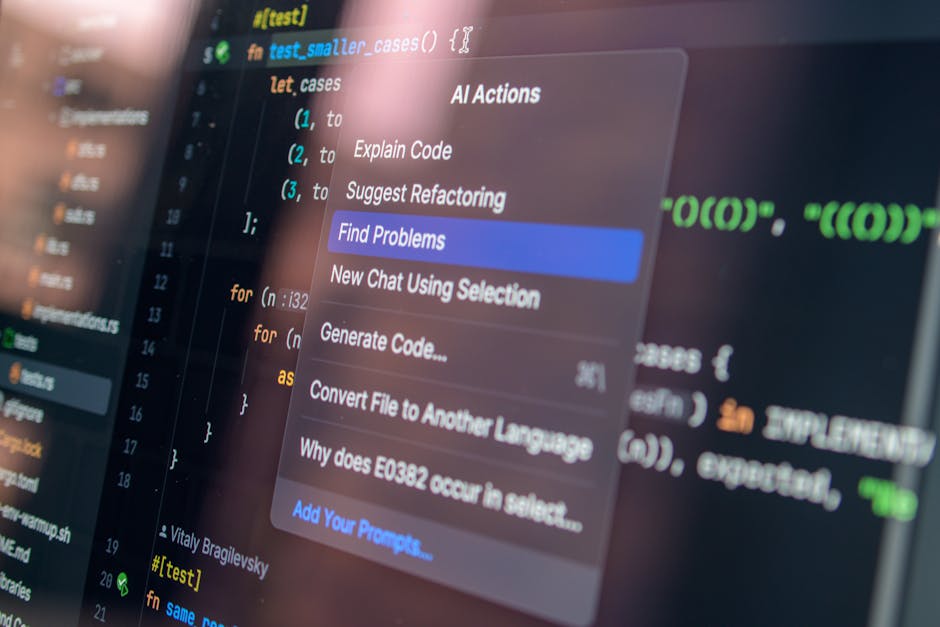
For decades, software development has been a labor-intensive, human-centric craft defined by the constraints of IDEs, manual debugging, and the inherent friction of collaborative coding. Agentic AI is dismantling these constraints by introducing autonomous coding agents capable of analyzing massive, sprawling codebases, identifying architectural debt, and executing end-to-end feature implementations.
Traditional AI coding assistants act like sophisticated autocomplete functions. In contrast, agentic AI systems—such as those utilizing recursive reasoning loops—can be tasked with high-level objectives like "refactor this legacy authentication module to support OAuth 2.0 and ensure zero downtime." The agent decomposes this goal into a series of sub-tasks: auditing the existing dependencies, drafting the new implementation, writing unit tests, initiating a canary deployment, and verifying the system logs. If an error occurs, the agent iterates, troubleshoots the stack trace, and corrects its own logic. This moves the developer role from "writer of code" to "architect of intent."
This transformation impacts the Software Development Life Cycle (SDLC) by compressing time-to-market. When agents manage the mundane aspects of CI/CD pipelines, boilerplate generation, and security patching, engineering teams are liberated to focus on higher-order system design and product strategy. However, this creates a new strategic burden: the governance of agentic autonomy. When codebases are largely generated by autonomous agents, the risk of "hallucinated" architecture or security vulnerabilities introduced through automated suggestions necessitates a more robust layer of AI-driven static analysis and automated verification tools. The strategic mandate for CTOs is now the implementation of "Agentic Governance Frameworks"—systems that define the guardrails within which autonomous agents operate to prevent catastrophic technical debt or logic drift.
Reimagining Global Logistics through Agentic Orchestration
While software development sees a shift in creation, logistics is experiencing a shift in orchestration. Logistics has historically been a game of predictive analytics—using data to guess demand and capacity. Agentic AI transforms this into a game of reactive, real-time optimization. In a global supply chain, an agentic system does not just report a delay; it perceives the delay, calculates the downstream impact on inventory, identifies alternative logistics routes, negotiates new shipping contracts with carriers, and updates the ERP system—all in seconds.
The complexity of modern logistics—involving volatile energy costs, geopolitical instability, and fragmented carrier networks—often renders static optimization models obsolete within hours. Agentic AI operates as a continuous, distributed decision engine. In the warehouse, an agent might oversee autonomous mobile robots (AMRs), adjusting flow dynamically based on real-time order surges, energy availability, and maintenance schedules of the hardware itself.
The transformative impact here lies in the removal of latency between data and action. By leveraging multi-agent systems, organizations can create a "supply chain digital twin" that is not just observational but operational. One agent might manage inventory procurement, another handles route planning, and a third manages financial settlements. These agents communicate in an internal API-driven language, ensuring that the supply chain functions as a unified, fluid organism rather than a series of siloed departments. Strategic adaptation in this sector requires moving away from hierarchical management structures toward decentralized, agentic networks that can respond to local disruptions without requiring centralized authorization for every tactical move.
The Strategic Imperative: Managing Human-Agent Collaboration
The deployment of agentic AI is as much a cultural challenge as it is a technical one. As software development and logistics functions become increasingly automated, the nature of human labor changes. In software, the premium shifts to system design, edge-case troubleshooting, and ethical oversight. In logistics, the premium shifts to the design of the agentic strategy itself—determining the objective functions the agents should optimize for.
Organizations must prepare for a "strategy of delegation." Just as a manager delegates tasks to a human team, leaders must learn to define clear objectives, success metrics, and constraints for their digital agents. The failure to do so results in "agentic entropy," where autonomous systems, if poorly constrained, can optimize for the wrong metrics. For example, a logistics agent tasked solely with "speed of delivery" might unintentionally inflate costs or ignore sustainable logistics mandates. Strategic adaptation therefore requires the establishment of "Objective Governance," where business goals are continuously mapped against AI performance to ensure alignment with organizational values.
Furthermore, there is a significant shift in talent acquisition. The demand for generic software developers or manual supply chain planners is declining, while the demand for "Agentic System Architects" and "AI Operations (AIOps) Analysts" is surging. These roles require a unique synthesis of domain expertise and the ability to interpret and manipulate the logic flows of autonomous agents. Adapting to this reality means investing heavily in the internal reskilling of workforces. The companies that will thrive are those that view agents not as replacements for their personnel, but as force multipliers that allow a team of ten to perform the work that previously required a department of a hundred.
Addressing the Risks: Security, Reliability, and Control
The rapid adoption of agentic AI brings significant exposure, particularly in cybersecurity and systemic risk. In software development, an agentic system with write access to production code represents a high-value target for adversaries. A compromised agent could introduce backdoors or malicious logic at a scale and speed that human review processes cannot catch. Strategic adaptation requires the implementation of "Zero Trust Agentic Infrastructure," where agentic workflows are sandboxed, monitored by independent "auditor agents," and subjected to mandatory human sign-off for critical changes.
In logistics, the risk is operational paralysis. A chain of interconnected agents, if susceptible to a shared prompt injection attack or data poisoning, could effectively halt global supply flows. The strategic response is to ensure modularity. By compartmentalizing agentic systems—ensuring that an agent managing inventory in the North American market is logically isolated from the agent managing the European distribution centers—firms can contain the blast radius of any potential agent failure or manipulation.
Moreover, the "black box" nature of complex AI reasoning models remains a hurdle. For auditing and compliance purposes, organizations must prioritize "Explainable Agentic AI" (XAAI). This involves requiring agents to log their chain-of-thought, providing an auditable trail of why a specific decision was made. This is not only a regulatory requirement for sectors like healthcare or finance but a strategic necessity for debugging complex, multi-agent workflows.
The Future of Competitive Advantage
The competitive landscape of the next decade will be defined by the "Agentic Velocity"—the speed at which an organization can deploy, refine, and scale autonomous agents to solve complex business problems. Software firms that utilize agentic frameworks to iterate their products hourly will naturally outpace those tethered to traditional, weekly sprint cycles. Logistics providers that leverage agentic orchestration will offer near-perfect inventory visibility and resilience in an increasingly volatile global market.
The era of digital transformation, characterized by the move from paper to screens, has concluded. We have entered the era of "Agentic Transformation," characterized by the move from manual, human-directed workflows to autonomous, self-correcting business operations. This is a profound shift that demands a departure from the comfort of manual control. It requires leaders who are comfortable with the ambiguity of autonomous processes and who are willing to invest in the architecture, security, and human-machine integration necessary to maintain control in a world where the speed of execution is no longer limited by the speed of human thought.
The final strategic frontier is the integration of these systems into a unified digital ecosystem. Isolated agentic pockets—while effective—will inevitably be surpassed by integrated agentic ecosystems where software development agents talk to logistics agents, which in turn talk to financial clearing agents. This convergence represents the true promise of agentic AI: the creation of a self-optimizing enterprise that adapts to market shifts in real time. Organizations that fail to start this strategic shift today are not merely missing out on an efficiency gain; they are systematically falling behind an evolutionary curve that will define the winners and losers of the next industrial epoch. The path forward is not just about adopting new tools; it is about fundamentally rethinking the nature of work, the architecture of systems, and the structure of the firm itself.
