
Man Made Or Computer Made
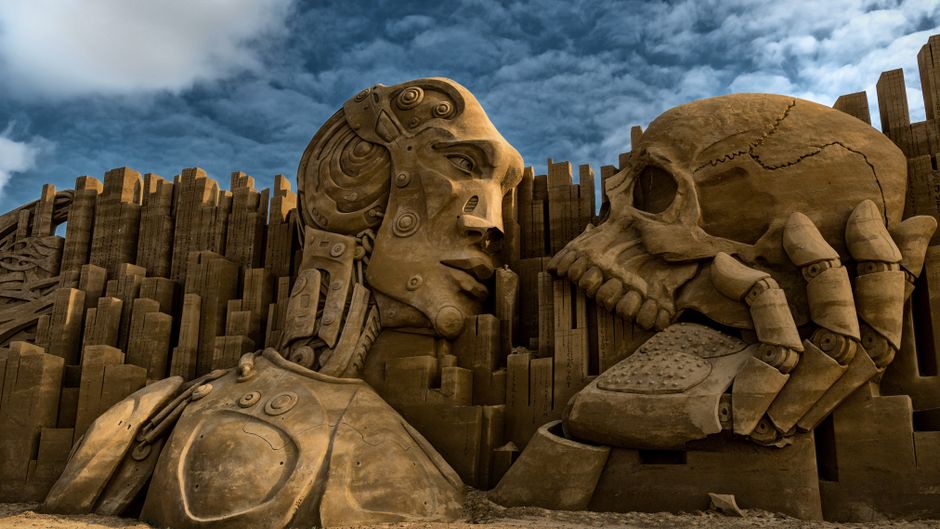
Man-Made vs. Computer-Made: Navigating the Evolving Landscape of Creation
The distinction between "man-made" and "computer-made" has become increasingly blurred in the 21st century, presenting a complex and evolving landscape of creation. Historically, "man-made" has been a broad descriptor encompassing any object or process originating from human effort, skill, and ingenuity, from the simplest stone tool to the most intricate Renaissance sculpture. This term inherently emphasizes human agency, the deliberate application of physical and mental labor, and the tangible touch of the individual creator. It conjures images of artisans, craftspeople, engineers, and artists directly shaping materials, whether through physical manipulation, meticulous design, or the application of learned techniques. The value embedded within "man-made" often stems from this direct human connection – the perceived authenticity, the narrative of its creation, the demonstration of skill honed over time, and the unique imperfections that can speak to its handmade nature. Think of the subtle variations in hand-blown glass, the unique brushstrokes of a painting, or the personalized inscription on a bespoke piece of furniture. These are qualities that resonate deeply with consumers and collectors, often commanding premium prices due to their perceived inherent value and exclusivity.
However, the advent and rapid advancement of computing technology have introduced a powerful new paradigm: the "computer-made." This term refers to objects, processes, or creations that are either entirely generated, designed, or executed by computer programs and algorithms, or significantly augmented by computational power. This can range from the intricate designs of 3D-printed components, the algorithmically generated art and music, to the automated manufacturing processes that rely on sophisticated software. The defining characteristic of "computer-made" is the reliance on digital instructions and automated execution. This often leads to unparalleled precision, repeatability, scalability, and the ability to explore design spaces that would be impossible or prohibitively expensive for human hands alone. For instance, complex aerospace components with organic, lightweight structures are often designed and manufactured using computational fluid dynamics and advanced additive manufacturing techniques, pushing the boundaries of what’s physically achievable. Similarly, generative adversarial networks (GANs) can produce photorealistic images or novel musical compositions based on vast datasets, demonstrating a form of creation that bypasses traditional human artistic processes.
The SEO implications of these terms are significant, impacting how content is discovered and categorized online. When users search for products or services, their choice of terminology often reflects their underlying values and expectations. Someone seeking a unique, artisanal gift might search for "handmade leather wallet," while a customer prioritizing precision and modern design might look for "3D printed phone case." Content creators and businesses must strategically use these keywords to attract the right audience. For example, an e-commerce site selling handcrafted jewelry would heavily optimize product descriptions and blog posts with terms like "artisanal," "handcrafted," "bespoke," and "one-of-a-kind." Conversely, a company specializing in rapid prototyping or custom manufacturing would focus on keywords such as "3D printing services," "CNC machining," "digital manufacturing," and "precision engineering." Understanding these search patterns allows for targeted marketing and more effective online visibility.
The rise of computer-aided design (CAD) and computer-aided manufacturing (CAM) has fundamentally altered traditional design and production workflows. CAD software allows designers to create highly detailed 3D models with precise measurements, enabling them to visualize and iterate designs with unprecedented speed and accuracy. This digital blueprint then feeds directly into CAM software, which translates the design into instructions for automated machinery. This integration minimizes human error in the manufacturing process, leading to greater consistency and reduced waste. For industries requiring high precision and complex geometries, such as aerospace, automotive, and medical device manufacturing, CAD/CAM is indispensable. The ability to simulate performance and test designs digitally before physical prototyping saves considerable time and resources. This shift from manual drafting and machining to digital workflows highlights a significant evolution in the "man-made" process itself, as human ingenuity is now often applied at the design and programming stage, rather than solely at the physical creation stage. The human element remains crucial in defining the parameters, setting the goals, and interpreting the results, but the execution is increasingly delegated to the machine.
Artificial intelligence (AI) represents a further frontier in the computer-made domain, moving beyond mere automation to encompass learning, problem-solving, and even creativity. AI algorithms can analyze vast datasets to identify patterns, make predictions, and generate novel outputs. In art, AI can be trained on existing artworks to create new pieces in various styles. In music, AI can compose original melodies and harmonies. In writing, AI language models can generate text for articles, stories, and even code. This raises profound questions about authorship and originality. When an AI generates a piece of art, who is the creator? Is it the programmer who developed the algorithm, the user who provided the prompts, or the AI itself? From an SEO perspective, the emergence of AI-generated content presents challenges and opportunities. While AI can produce high volumes of text quickly, ensuring its originality, accuracy, and ethical considerations is paramount. Search engines are increasingly sophisticated in detecting AI-generated content, and prioritizing human-created, valuable content remains a core principle of their algorithms. Therefore, while AI-generated content can be a tool, its integration into a comprehensive SEO strategy requires careful human oversight and a focus on delivering genuine value to the user.
The interplay between man-made and computer-made is not always a case of mutual exclusivity; rather, it’s often a synergistic relationship. Many of the most innovative creations today are the result of a collaborative effort between human designers and intelligent machines. For example, in architecture, architects use sophisticated software to design buildings, but their vision, aesthetic sensibilities, and understanding of human needs are what guide the design process. The software then assists in optimizing structural integrity, energy efficiency, and construction feasibility. Similarly, in product design, human designers conceive of the initial concept and user experience, while AI and advanced manufacturing technologies enable the realization of those ideas with enhanced functionality and aesthetics. This "human-in-the-loop" approach, where humans guide and supervise AI and automation, is crucial for ensuring that computer-made creations align with human values, ethical considerations, and specific project objectives.
The perception of value and quality often differs between man-made and computer-made products. Man-made items, particularly those produced by skilled artisans, are often associated with craftsmanship, durability, and a unique personal touch. They carry a narrative of human effort and tradition, which can evoke emotional connections and justify higher price points. For instance, a hand-knitted sweater made from ethically sourced wool might be valued not just for its warmth but for the time, skill, and care invested by the knitter. Conversely, computer-made products, especially those manufactured at scale, are often valued for their precision, consistency, affordability, and technological sophistication. A 3D-printed drone component might be prized for its lightweight design, aerodynamic efficiency, and ability to be produced on demand. The SEO strategy for these distinct categories must reflect these differing value propositions. Businesses selling handcrafted goods should emphasize storytelling, authenticity, and the human element in their content. Companies offering advanced manufacturing services should highlight precision, innovation, scalability, and technological capabilities.
The ethical considerations surrounding computer-made creations, particularly those involving AI, are increasingly important. Questions of job displacement due to automation, the potential for bias in AI algorithms, and the ownership of AI-generated intellectual property are critical. For businesses and content creators, transparency about the role of AI in their processes is becoming essential. Disclosing when content is AI-assisted or generated can build trust with audiences. In terms of SEO, search engines are likely to reward transparency and ethical practices. Content that is clearly attributed and where the human contribution is evident is more likely to be favored. The long-term SEO success of computer-made creations will depend not only on their technical merit but also on their ethical alignment and their ability to demonstrate a clear benefit to human users.
In conclusion, the distinction between man-made and computer-made is no longer a simple dichotomy but a spectrum of interconnected creation processes. Understanding these nuances is critical for effective SEO, marketing, and for navigating the future of design and production. Businesses must strategically leverage keywords that reflect the specific nature of their creations, whether emphasizing the artisanal quality of "handmade" or the precision and innovation of "computer-aided design" and "AI-generated." The synergy between human ingenuity and computational power is driving innovation, and the most successful strategies will embrace this evolving landscape, prioritizing transparency, ethical considerations, and the delivery of genuine value to the end-user, regardless of how the creation ultimately comes into being. The continuous evolution of technology means that the definition and implications of "man-made" and "computer-made" will continue to shift, demanding ongoing adaptation and a deep understanding of how these terms shape online visibility and consumer perception.
