
How To Make An Ornament Wreath
DIY Ornament Wreath: A Comprehensive Guide to Crafting Festive Decor
Creating a DIY ornament wreath offers a vibrant and personalized touch to holiday decorations. This guide provides a step-by-step process, detailing materials, techniques, and tips for achieving a stunning and durable ornament wreath. The foundation of any successful ornament wreath lies in the careful selection of materials. Begin by gathering a diverse collection of ornaments. Consider a mix of sizes, shapes, and finishes for visual interest. Glass ornaments, shatterproof plastic ornaments, and even smaller wooden or felted baubles all contribute to a dynamic composition. The quantity will depend on the desired size of your wreath and the density of coverage. For a standard 14-18 inch wreath base, anticipate needing anywhere from 50 to 100 ornaments, again depending on their size. Prioritize a color scheme to unify the design. This could be traditional Christmas colors like red, green, and gold, or a more contemporary palette of blues, silvers, and whites, or even a monochromatic scheme for a sophisticated look. Beyond ornaments, the wreath base is crucial. Wire wreath forms, typically available in 10, 12, 14, and 18-inch diameters, are an excellent choice due to their sturdiness and ease of attachment. Alternatively, a Styrofoam wreath form can be used, though it requires a different attachment method. Wire wreath forms are generally preferred for their ability to support the weight of numerous ornaments securely. Adhesives are critical. A high-temperature glue gun with strong, reliable glue sticks is indispensable. For added security, consider using floral wire or pipe cleaners, especially for heavier ornaments or those with delicate caps. Ribbon is often incorporated for hanging and aesthetic appeal. Choose a sturdy ribbon, at least 1.5 inches wide, in a complementary color or a festive pattern. Wire-edged ribbon is particularly useful as it holds its shape well and can be easily manipulated into bows. Finally, consider embellishments like faux greenery, pinecones, or glitter for added texture and visual depth.
The process of constructing an ornament wreath begins with preparing the wreath base and ornaments. For a wire wreath form, the metal rings provide numerous anchor points. If using a Styrofoam form, it’s advisable to cover it first with a layer of fabric or burlap to provide a better surface for glue adhesion and to conceal the foam if any gaps appear. This can be achieved by hot gluing the fabric around the form. Next, inspect your ornaments. Ensure that the hanging loops or caps are secure. If any are loose, re-glue them carefully. For ornaments with strings or wires, remove them as they will likely interfere with the attachment process. If an ornament has a very small cap, you might consider drilling a small hole through the cap to thread wire or pipe cleaner for a more secure attachment. This is an optional step but can greatly enhance the durability of your wreath, especially if it will be displayed in a high-traffic area or outdoors. Organize your ornaments by size and color. This pre-sorting will make the assembly process more efficient and allow for a more balanced distribution of elements. Creating a visual plan in your mind or even sketching out a rough layout can be beneficial. Think about where you want the largest ornaments to go, how you will transition to smaller ones, and how to incorporate any accent pieces.
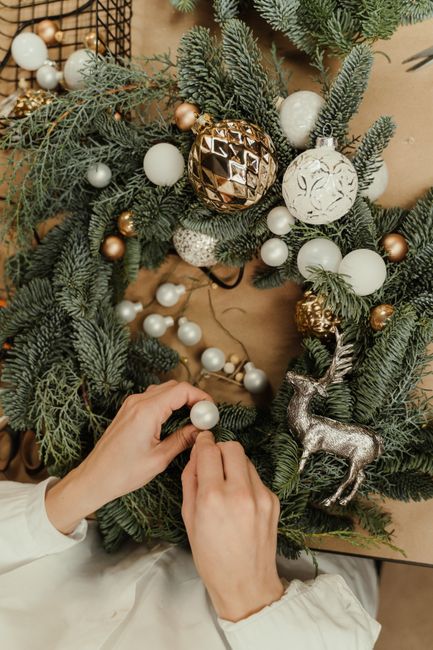
Attaching ornaments to the wire wreath form is the core of the DIY ornament wreath creation. The most common and effective method involves hot glue. Apply a generous amount of hot glue to the cap or the back of the ornament. Swiftly and firmly press the ornament onto the wire wreath form. Hold it in place for several seconds to allow the glue to set. Work in sections, gradually covering the entire wreath form. It’s important to vary the placement of the ornaments to avoid creating monotonous patterns. Overlap ornaments slightly to ensure full coverage and to conceal the wreath base as much as possible. For larger or heavier ornaments, consider reinforcing the hot glue with floral wire. Poke the floral wire through the ornament cap (if possible) or around its stem, then twist the wire around the wreath form. This provides an extra layer of security. Alternatively, pipe cleaners can be used in a similar fashion, threading them through the cap and twisting them around the wreath form. When working with glass ornaments, exercise caution. While visually appealing, they are fragile and can break if mishandled. Shatterproof plastic ornaments are a safer and more durable alternative, especially if the wreath will be displayed in a home with children or pets. The placement of ornaments should be strategic. Begin with larger ornaments, distributing them evenly around the wreath. Then, fill in the spaces with medium-sized ornaments, and finally use the smallest ornaments to fill any remaining gaps and add intricate detail. Consider the overall shape you want to achieve. Some prefer a perfectly rounded wreath, while others opt for a more organic, cascading effect.
Incorporating ribbon and embellishments adds a professional and personalized finish to your ornament wreath. Ribbon can be used in several ways. A large bow can be attached to the top or bottom of the wreath for a traditional look. To create a substantial bow, use wire-edged ribbon. Fold the ribbon back and forth to create loops, securing the center with floral wire or pipe cleaner. Attach this bow to the wreath form using hot glue or wire. Alternatively, you can weave strips of ribbon through the ornament arrangement, adding pops of color and texture. This can be done before or after attaching all the ornaments, depending on the desired effect. For a more subtle integration, cut ribbon into small pieces and tie them into tiny bows, then hot glue them amongst the ornaments. Faux greenery, such as pine sprigs or eucalyptus, can be strategically placed between ornaments to add a natural element and break up the visual density of the baubles. Secure these greenery pieces with hot glue or floral wire. Pinecones, either natural or painted, can also be hot-glued into gaps, adding a rustic touch. Glitter can be applied to individual ornaments for extra sparkle, or a light dusting can be sprayed over the entire wreath once assembled, though this can be messy and should be done in a well-ventilated area. When adding embellishments, consider the overall weight of the wreath. Too many heavy additions can strain the attachment points and potentially cause the wreath to sag or fall apart.
Maintaining the integrity and aesthetic appeal of your DIY ornament wreath requires attention to detail and secure attachment methods. When attaching ornaments, it is vital to ensure they are firmly adhered to the wreath base. For wire wreath forms, the numerous contact points offer excellent adhesion opportunities. However, for heavier ornaments, relying solely on hot glue might not be sufficient for long-term durability, especially in environments with temperature fluctuations or vibrations. In such cases, supplementing hot glue with floral wire or pipe cleaners becomes essential. Threading these wires through the ornament cap, if it’s designed for it, or carefully wrapping them around the stem and then twisting them around the sturdy metal rings of the wreath form provides a robust connection that can withstand considerable stress. If using a Styrofoam wreath form, the glue adheres directly to the foam. While hot glue forms a strong bond with Styrofoam, the material itself can be somewhat brittle. This reinforces the importance of using a fabric or burlap covering to provide a more stable and less porous surface for glue adhesion. Furthermore, when applying glue, aim for a generous amount that not only adheres the ornament but also fills any small crevices, preventing the ornament from shifting. For ornaments with very small or delicate caps, a small drill bit can be used to create a pilot hole through the cap, allowing for a more secure wire or pipe cleaner attachment. This technique is particularly beneficial for glass ornaments, where the cap is the primary point of attachment.
The arrangement and density of ornaments are key factors in the visual impact of your DIY ornament wreath. A common approach is to start with larger ornaments, spacing them strategically around the wreath to establish a foundational structure. These larger pieces serve as focal points and help define the overall size and presence of the wreath. Subsequently, medium-sized ornaments are used to fill the spaces between the larger ones, gradually building coverage and visual flow. This layering approach ensures that the wreath doesn’t appear sparse or cluttered. The final stage involves using the smallest ornaments to fill any remaining gaps, add intricate detail, and create a sense of completeness. This technique of working from large to small creates a harmonious and balanced composition. Overlapping ornaments slightly is a crucial detail that contributes to a full and professional look. This overlap helps to conceal the underlying wreath form and creates a seamless transition between individual ornaments. The degree of overlap can be adjusted to achieve a denser or more open appearance, depending on personal preference. For a truly luxurious feel, consider incorporating a variety of textures and finishes. Mixing matte and shiny ornaments, smooth and textured surfaces, and different materials like glass, plastic, and even natural elements like small pinecones or dried berries can add significant visual interest and depth. The color palette is also paramount. Sticking to a cohesive color scheme, whether it’s traditional festive hues, a monochromatic theme, or a contrasting combination, unifies the design and makes the wreath more visually appealing.
The hanging mechanism for your DIY ornament wreath is as important as its construction for both functionality and aesthetics. For most ornament wreaths, a strong ribbon is the preferred method for hanging. Opt for a wide, sturdy ribbon, at least 1.5 inches in width, to distribute the weight of the wreath evenly and prevent it from digging into the wall or door. Wire-edged ribbon is highly recommended because it offers excellent structure, allowing you to tie a neat, shapely bow that will hold its form. To create a hanging loop, cut a generous length of ribbon and form a loop, securing the ends by tying a knot or using hot glue. Then, attach this loop securely to the back of the wreath form. For wire wreath forms, you can thread the ribbon ends through the wire and twist them tightly. For Styrofoam forms, hot glue can be used, but reinforce it with staples or small screws drilled through the ribbon and into the foam for added security, especially for heavier wreaths. The placement of the hanging loop is also important. Centering it on the top of the wreath ensures that it hangs straight. Consider the environment where the wreath will be displayed. If it’s an exterior door, ensure the ribbon is weather-resistant. For indoor displays, fabric ribbons are perfectly suitable. A well-constructed hanging mechanism not only ensures the wreath stays put but also adds a decorative element. A beautifully tied bow at the top can enhance the overall visual appeal of the ornament wreath. For larger or heavier wreaths, it might be prudent to consider using a heavy-duty command hook or a sturdy picture hanger on the wall to support the weight.
The longevity and visual appeal of your DIY ornament wreath can be significantly enhanced by careful consideration of ornament materials and attachment techniques. For a wreath intended for outdoor display, shatterproof ornaments are a far more practical choice than delicate glass baubles. The constant exposure to varying weather conditions, including potential rain, wind, and temperature fluctuations, can cause glass ornaments to crack, chip, or even shatter. Plastic or acrylic ornaments, on the other hand, are far more resilient and can withstand these elements with much greater success. When attaching ornaments, especially to a wire wreath form, it’s crucial to ensure that the caps are securely fastened. Many ornaments come with small metal or plastic caps that screw onto the ornament’s stem. If these caps appear loose or are prone to detachment, it’s advisable to reinforce them with a small amount of hot glue before attaching the ornament to the wreath. This small step can prevent the loss of individual ornaments over time. For very heavy ornaments, relying solely on hot glue may not be sufficient. In such cases, employing floral wire or pipe cleaners is a more robust solution. You can thread the wire through the ornament cap, if possible, or carefully wrap it around the ornament’s stem, and then twist the wire securely around the metal rings of the wreath form. This creates a strong mechanical bond that can support substantial weight. When working with Styrofoam wreath forms, the adhesion relies on the glue bonding directly to the foam. While hot glue adheres well to Styrofoam, the foam itself can be somewhat brittle. Therefore, it’s often recommended to cover the Styrofoam form with a layer of burlap, felt, or fabric before attaching ornaments. This provides a more durable surface for glue adhesion and can also conceal any imperfections in the foam.
The creative process of making an ornament wreath offers extensive opportunities for personalization and adaptation to various decorating styles. Beyond the classic round wreath form, you can explore alternative shapes such as stars, trees, or even hearts, which are often available in wire or Styrofoam bases. These unique shapes can provide a distinct focal point for your holiday décor. The choice of ornaments is perhaps the most impactful element in defining the wreath’s aesthetic. For a sophisticated and minimalist look, consider a monochromatic color scheme, using varying shades of a single color like silver, gold, or deep blue. Alternatively, a rainbow palette of ornaments can create a vibrant and playful statement. Incorporating ornaments with unique textures, such as glitter-dipped baubles, flocked ornaments, or even hand-painted ones, adds visual depth and tactile interest. For a more rustic feel, consider integrating natural elements like small pinecones, dried orange slices, or cinnamon sticks amongst the ornaments. These natural additions can complement a traditional or woodland-themed décor. Ribbon plays a crucial role in both construction and decoration. Beyond the hanging bow, consider weaving strips of ribbon through the ornament arrangement to add pops of color and texture. You can also tie small ribbon bows and hot glue them strategically between ornaments. If you want to create a truly unique wreath, consider using a theme. For example, a "winter wonderland" theme could incorporate blue, silver, and white ornaments, along with faux snow and icicles. A "nutcracker" theme might feature ornaments in red, green, and gold, with small nutcracker figurines interspersed throughout. The possibilities are virtually endless, allowing you to create a truly bespoke piece of holiday art that reflects your personal style and complements your home’s existing décor. Remember to consider the scale of your ornaments in relation to the size of your wreath form. For a larger wreath, you’ll need a greater number of ornaments, and larger ornaments will be necessary to maintain visual balance. Conversely, smaller wreaths benefit from a more delicate selection of smaller baubles. The final look is a testament to the careful selection and thoughtful arrangement of each individual component.
