
Category Early Childhood Education
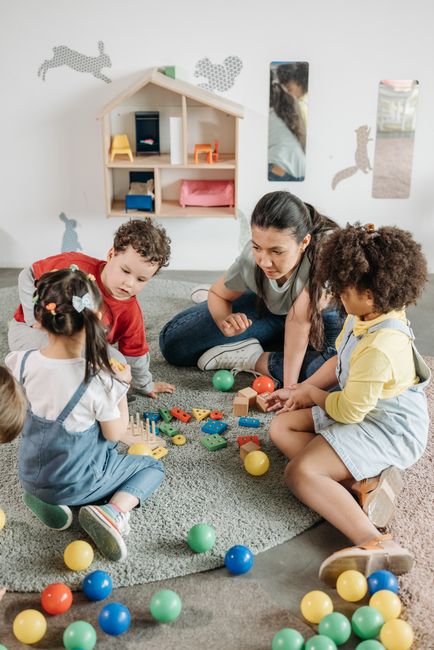
Early Childhood Education: Foundational Years for Lifelong Learning
Early childhood education (ECE) encompasses the formal and informal learning experiences that children encounter from birth up to approximately eight years of age. This critical developmental period lays the groundwork for a child’s future academic success, social-emotional well-being, and overall cognitive growth. The principles underpinning effective ECE are rooted in an understanding of child development, recognizing that young children learn best through play-based, hands-on activities, guided exploration, and nurturing relationships. ECE programs, whether they are childcare centers, preschools, or Head Start initiatives, are designed to foster holistic development, addressing not only cognitive skills such as pre-literacy and numeracy but also crucial social, emotional, physical, and creative domains. The effectiveness of ECE is widely supported by research, demonstrating a direct correlation between quality early learning experiences and improved outcomes in school readiness, reduced grade repetition, increased graduation rates, and even enhanced economic productivity later in life. Understanding the multifaceted nature of ECE is paramount for parents, educators, policymakers, and communities seeking to invest in the potential of every child.
The core philosophy driving effective early childhood education is a child-centered approach. This means that curriculum, pedagogy, and the learning environment are all designed with the unique needs, interests, and developmental stages of young children at the forefront. Rather than a rigid, teacher-led transmission of information, ECE emphasizes active learning. Children are encouraged to explore, experiment, ask questions, and construct their own understanding of the world around them. This constructivist learning theory is fundamental to ECE, recognizing that knowledge is not passively received but actively built by the learner. Play, often perceived as mere recreation, is the primary vehicle for learning in early childhood. Through play, children develop problem-solving skills, critical thinking, creativity, imagination, and the ability to collaborate with peers. Whether it’s building with blocks to understand spatial reasoning, engaging in dramatic play to explore social roles, or manipulating art materials to express ideas, play is intrinsically linked to cognitive and socio-emotional development.
Furthermore, ECE recognizes the interconnectedness of developmental domains. A child’s progress in language development, for instance, is often intertwined with their fine motor skills (e.g., holding a crayon to draw a picture that represents a story) and their social-emotional capacity (e.g., sharing ideas with a peer during group storytelling). Therefore, high-quality ECE programs integrate activities that simultaneously stimulate multiple areas of development. This holistic approach ensures that children are not only prepared for the academic demands of kindergarten but also equipped with the social and emotional competencies necessary to thrive in a group setting and navigate their relationships. Social-emotional learning (SEL) is a particularly vital component of ECE, focusing on helping children understand and manage their emotions, set and achieve positive goals, feel and show empathy for others, establish and maintain positive relationships, and make responsible decisions. These foundational SEL skills are predictive of academic success, mental health, and overall well-being throughout life.
The role of the early childhood educator is crucial and requires specialized knowledge and skills. Effective ECE teachers are not simply caretakers; they are skilled facilitators, observers, and diagnosticians of child development. They create rich, stimulating, and safe learning environments that encourage exploration and inquiry. This involves careful planning of activities, thoughtful arrangement of learning centers (e.g., a dramatic play corner, an art station, a literacy nook, a block area), and the provision of a variety of age-appropriate materials. Educators must also be adept at observing children’s interactions, identifying their individual learning styles, strengths, and challenges, and then tailoring their instruction and support accordingly. Differentiated instruction is a key strategy, ensuring that all children, regardless of their background or developmental pace, receive the support they need to progress. Building strong relationships with children, characterized by warmth, respect, and responsiveness, is fundamental to fostering a sense of security and trust, which in turn promotes learning and engagement.
The impact of early childhood education on a child’s trajectory is substantial and well-documented. Longitudinal studies consistently show that children who participate in high-quality ECE programs are more likely to enter kindergarten ready to learn, exhibiting stronger pre-reading and pre-math skills. This early advantage often translates into higher academic achievement throughout their schooling. For example, studies on programs like the Perry Preschool Project and the Abecedarian Project have demonstrated remarkable long-term benefits, including increased high school graduation rates, higher college enrollment, and greater lifetime earnings for participants compared to their peers who did not attend similar programs. Beyond academic gains, ECE also significantly contributes to the development of social and emotional competencies. Children who attend quality programs tend to exhibit better self-regulation, enhanced social skills, and a greater capacity for empathy. These social-emotional strengths are critical for positive peer interactions, successful classroom participation, and ultimately, for building healthy relationships and contributing positively to society.
The accessibility and quality of early childhood education remain significant societal concerns. While the benefits are widely recognized, equitable access to high-quality ECE is not universally available. Disparities often exist along socioeconomic, racial, and geographic lines, meaning that children from disadvantaged backgrounds may have less access to the very programs that could significantly boost their developmental trajectories. This creates an early achievement gap that can be difficult to close later in life. Addressing these inequities requires concerted efforts from policymakers, communities, and families to ensure that all children have the opportunity to benefit from quality early learning experiences. This includes investing in affordable and accessible ECE options, supporting the ECE workforce through fair compensation and professional development, and developing evidence-based curricula that are culturally responsive and developmentally appropriate.
In conclusion, early childhood education represents a critical investment in the future of individuals and society. By focusing on play-based learning, fostering holistic development, and empowering skilled educators, ECE programs lay the essential foundation for lifelong learning and success. The evidence overwhelmingly supports the profound and lasting positive impacts of quality early learning experiences, highlighting its role in promoting academic achievement, social-emotional well-being, and overall human potential. Therefore, prioritizing and strengthening early childhood education is not merely an educational imperative but a societal necessity for building a more equitable and prosperous future.
The effectiveness of early childhood education is inextricably linked to the quality of its pedagogical approaches. At the heart of effective ECE lies the principle of developmentally appropriate practice (DAP). DAP, as defined by the National Association for the Education of Young Children (NAEYC), is teaching that is grounded in the knowledge of how children learn and develop at each specific age and stage, and is therefore tailored to meet their individual needs and interests. This involves understanding that children in different age groups (e.g., infants, toddlers, preschoolers, early elementary students) have distinct cognitive, social, emotional, and physical capabilities and learning styles. For infants, the focus is on building secure attachments, fostering sensory exploration, and developing foundational motor skills. Toddlers are engaged through interactive experiences that promote language development, independence, and early social interaction. Preschoolers thrive in environments that offer structured play, opportunities for imaginative exploration, and the beginnings of formal literacy and numeracy concepts. In early elementary grades, the focus expands to more formal academic instruction while still integrating play and hands-on learning to solidify understanding.
Play-based learning is not a passive activity but a dynamic and purposeful process. Educators intentionally design play experiences that are rich in learning opportunities. This might involve setting up a dramatic play area with props that encourage storytelling and role-playing, which develops language, social skills, and imagination. A block area can foster spatial reasoning, problem-solving, and an understanding of physics. Art and music centers allow for creative expression, fine motor skill development, and an appreciation for different cultures. Science and nature exploration, whether through hands-on experiments or observing the natural world, sparks curiosity and critical thinking. Literacy can be integrated through read-aloud sessions, providing access to a variety of books, and creating opportunities for emergent writing. Numeracy is fostered through counting games, sorting activities, and building with manipulatives. The educator’s role is to observe children’s engagement in these activities, ask open-ended questions that provoke deeper thinking, and scaffold learning by providing support and extensions as needed.
The curriculum in early childhood education is typically emergent, meaning it is responsive to the children’s interests and the developmental needs of the group. Rather than a rigid, pre-determined set of topics, educators observe what the children are curious about and build learning experiences around those emerging themes. For example, if children show a strong interest in dinosaurs, the curriculum might incorporate activities exploring dinosaur names, sizes, habitats, and related vocabulary. This approach ensures that learning is relevant and engaging for the children, fostering intrinsic motivation and a genuine love of learning. The emergent curriculum also allows for a flexible and dynamic learning environment, where educators can adapt their plans based on the group’s progress and evolving interests.
Professional development for early childhood educators is a critical component of ensuring high-quality ECE. This encompasses initial teacher preparation programs that equip future educators with a strong understanding of child development, pedagogy, and curriculum design, as well as ongoing professional learning opportunities. These opportunities might include workshops, conferences, mentorship programs, and coursework focused on specific areas like early literacy, special education inclusion, or technology integration. A well-supported and highly trained ECE workforce is essential for implementing effective practices, meeting the diverse needs of children, and fostering positive learning environments. Furthermore, fair compensation and respectful working conditions are vital for attracting and retaining qualified professionals in the field, which directly impacts the quality of education provided to young children.
The policy landscape surrounding early childhood education is complex and continually evolving. Various levels of government, from federal and state to local, play a role in funding, regulating, and promoting ECE services. Key policy areas include funding for programs like Head Start and state-funded preschool initiatives, regulations concerning child-to-staff ratios and health and safety standards, and policies aimed at supporting the ECE workforce. Advocates for ECE often focus on policies that expand access to affordable, high-quality programs, increase funding for ECE services, and support professional development for educators. The recognition of ECE as a critical component of early intervention, educational equity, and economic development continues to drive policy discussions and reform efforts.
Research plays an indispensable role in shaping the field of early childhood education. From foundational studies on child development to evaluations of specific ECE programs and pedagogical approaches, research provides the evidence base for effective practices and informs policy decisions. Longitudinal studies, in particular, have been instrumental in demonstrating the long-term benefits of quality ECE, influencing public perception and policy priorities. Ongoing research continues to explore new areas, such as the impact of technology on early learning, culturally responsive pedagogy, and effective strategies for supporting children with special needs. This continuous cycle of research, practice, and policy refinement is essential for advancing the quality and impact of ECE.
The integration of technology in early childhood education is a growing area of interest and debate. When used thoughtfully and appropriately, technology can serve as a powerful tool to enhance learning. This might include interactive educational apps that reinforce literacy and numeracy skills, digital storytelling tools that allow children to express their creativity, or virtual field trips that expose them to new environments. However, it is crucial that technology is used as a supplement to, rather than a replacement for, hands-on learning and meaningful social interaction. Over-reliance on screen time can be detrimental to a child’s development, and educators must carefully select and integrate technology in ways that are developmentally appropriate, engaging, and contribute to learning goals. The focus should always remain on fostering critical thinking, creativity, and social-emotional skills, with technology serving as a supportive tool.
In summary, early childhood education is a comprehensive field dedicated to nurturing the foundational growth of children from birth to approximately eight years of age. It is characterized by a child-centered, play-based pedagogical approach that recognizes the interconnectedness of all developmental domains. High-quality ECE programs, led by skilled and knowledgeable educators, create stimulating environments that foster cognitive, social, emotional, and physical development. The profound and lasting benefits of ECE are well-documented, extending from improved academic outcomes and enhanced social-emotional competencies to long-term economic advantages. Addressing issues of accessibility, equity, and ongoing professional development for educators are critical for maximizing the impact of ECE. Through continued research, informed policy, and a commitment to best practices, early childhood education remains a vital cornerstone for cultivating well-rounded individuals and a thriving society.
