
Tag Angel Food Cake
Angel Food Cake: A Feather-Light Culinary Masterpiece Explained
Angel food cake, a towering confection of ethereal lightness and delicate sweetness, holds a special place in the pantheon of classic desserts. Its name alone evokes images of heavenly indulgence, and its characteristic airy crumb and subtle vanilla flavor deliver on that promise. Unlike its denser, butter-rich counterparts, angel food cake relies on a foundation of whipped egg whites, sugar, and cake flour to achieve its signature texture. This absence of fat, including butter and oil, is the key to its incredibly light and porous structure, allowing it to rise dramatically in the oven and hold its delicate form. The process, while seemingly simple, demands precision and a keen understanding of ingredient interactions. Mastering angel food cake is a rewarding culinary endeavor, yielding a dessert that is both visually stunning and delightfully palatable, perfect for celebrations, light after-dinner treats, or as a canvas for a myriad of fruit-based toppings and glazes. Its versatility lies in its understated flavor, which readily accepts the embrace of fresh berries, whipped cream, and fruit coulis, creating a harmonious symphony of textures and tastes.
The science behind angel food cake’s inimitable texture is rooted in the protein structure of egg whites. When egg whites are whipped, the proteins within them unfold and coagitate, forming a stable foam. This foam traps air bubbles, which expand significantly when heated in the oven. The rapid expansion creates the cake’s characteristic airy, spongy interior. Crucially, the absence of fat is paramount. Fat coats protein strands, hindering their ability to unfold and create a stable foam. Therefore, any trace of egg yolk or residual fat in the mixing bowl or on the whisk attachments can compromise the cake’s volume and lightness. The sugar in the recipe plays a dual role. It sweetens the cake, of course, but it also stabilizes the egg white foam. Sugar crystals absorb moisture and act as a physical barrier, preventing the protein network from collapsing. As the sugar dissolves, it contributes to the syrup-like consistency of the batter, which further aids in creating a tender crumb. Cake flour is another critical component. Its lower protein content compared to all-purpose flour results in less gluten development during mixing. Gluten, while desirable in bread for its elasticity, would toughen an angel food cake, leading to a chewier, less delicate texture. The fine, soft nature of cake flour allows the cake to remain tender and melt-in-your-mouth.
The preparation of angel food cake involves several distinct stages, each requiring careful attention to detail. The primary step is the whipping of egg whites. This process can be initiated in a clean, dry bowl, ideally made of glass, copper, or stainless steel. Cream of tartar, an acidic salt, is almost always added to the egg whites before whipping. Cream of tartar acts as a stabilizer, helping the egg whites achieve maximum volume and creating a finer, more stable foam. It also contributes to the pure white color of the finished cake. The egg whites are whipped gradually, starting on a low speed and slowly increasing to medium-high. The sugar is then gradually added, often in a slow, steady stream, while the mixer continues to run. This gradual addition allows the sugar to dissolve properly and prevents the foam from collapsing. The egg whites should be whipped until they reach stiff, glossy peaks. This means that when the whisk is lifted, the peaks of the egg white foam stand straight up and do not droop. Over-whipping can lead to a dry, crumbly cake, while under-whipping will result in a cake that lacks volume and may have a gummy texture.
Once the egg white foam is perfected, the dry ingredients – typically cake flour, a small amount of sugar, and sometimes a pinch of salt – are gently folded in. This folding technique is crucial. It involves using a large spatula to carefully lift and turn the batter, incorporating the dry ingredients without deflating the delicate egg white foam. Overmixing at this stage will knock out the precious air that has been incorporated, leading to a dense cake. The batter should be folded until just combined, with no visible streaks of dry flour. Some recipes may also incorporate a small amount of vanilla extract or almond extract for flavor, which should also be gently folded in. The batter is then poured into an ungreased tube pan. A tube pan is essential for angel food cake as it allows the cake to bake evenly and prevents it from sinking in the center. The central tube facilitates heat circulation, ensuring that the interior cooks through. Some bakers also like to run a thin knife or skewer through the batter after pouring it into the pan to eliminate any large air pockets.
Baking angel food cake requires a moderate oven temperature, typically around 325°F to 350°F (160°C to 175°C). The cake is baked until it is golden brown on top and springs back when lightly touched. A skewer inserted into the center should come out clean. The key to preventing the cake from collapsing as it cools is to invert the pan immediately after it comes out of the oven. Most tube pans have "feet" for this purpose, or the pan can be inverted by placing the central tube over the neck of a bottle or can. This allows gravity to gently pull on the cake as it cools, preventing the structure from caving in on itself before it has fully set. The cake must cool completely in this inverted position before it is removed from the pan. Attempting to remove it while warm will almost certainly result in a collapsed, dense cake. Gentle coaxing with a thin, flexible spatula or knife around the edges of the pan is necessary for releasing the fully cooled cake.
The ingredient list for a classic angel food cake is remarkably simple, highlighting the power of a few well-chosen components. Typically, you’ll find:
- Egg Whites: The star of the show, providing the structure and airiness. The freshness of the eggs can play a role, though modern pasteurized egg whites are also a reliable option.
- Granulated Sugar: Sweetens the cake and stabilizes the egg white foam.
- Cake Flour: Crucial for its low protein content, ensuring a tender crumb. All-purpose flour is generally not recommended as it can result in a tougher cake.
- Cream of Tartar: An essential stabilizer for the egg whites, promoting volume and a fine texture.
- Salt: Enhances the overall flavor profile and balances the sweetness.
- Vanilla Extract or other Flavorings: Adds subtle aromatic notes. Almond extract is also a popular choice for its complementary flavor.
The precise ratios of these ingredients are critical. Too much flour can lead to a dry cake, while too little sugar can result in a weak, unstable foam. The volume of egg whites dictates the overall size of the cake, and consequently, the amount of sugar and flour needed to support that volume.
Troubleshooting common angel food cake issues is essential for achieving perfection. A sinking center is perhaps the most frequent problem, often caused by underbaking, overwhipping the egg whites too early in the process, or failing to invert the cake to cool. A dry or crumbly texture can result from overbaking, using too much flour, or over-whipping the egg whites and then aggressively folding in the dry ingredients. A gummy texture points to under-whipping the egg whites, insufficient sugar, or not baking the cake long enough for the moisture to evaporate. Toughness is almost always attributed to the use of all-purpose flour or over-mixing the batter after the dry ingredients have been added. Ensuring the egg whites are at room temperature before whipping can also improve their volume. Cold egg whites are more difficult to whip into a stable foam.
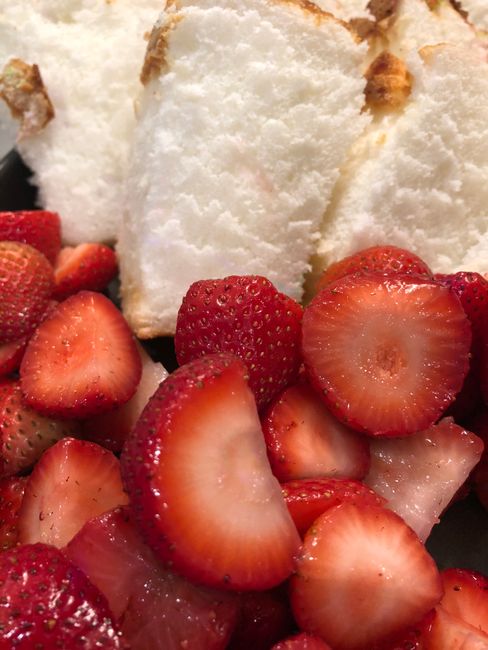
The versatility of angel food cake as a dessert base is one of its most appealing qualities. Its mild, sweet flavor makes it an ideal canvas for a wide array of toppings. Fresh berries, such as strawberries, blueberries, raspberries, and blackberries, are a classic pairing, their tartness providing a delightful contrast to the cake’s sweetness. A dollop of freshly whipped cream, lightly sweetened and perhaps infused with a touch of vanilla or liqueur, is another perennial favorite, adding a creamy richness that complements the cake’s lightness. Fruit coulis, made from pureed fruits and a touch of sugar, offer vibrant color and intense flavor. Lemon curd, with its tangy citrus notes, is also a popular choice, cutting through the sweetness with a zesty brightness. For a more decadent experience, a light chocolate glaze or a dusting of powdered sugar can be employed. Angel food cake can also be layered with fruit and whipped cream to create a stunning trifle or a celebratory dessert. Its ability to absorb moisture without becoming soggy also makes it an excellent choice for soaked cakes, where it can be infused with fruit juices or liqueurs.
Beyond its role as a standalone dessert, angel food cake can be incorporated into other culinary creations. It can be cubed and toasted to create a light and airy base for parfaits or used as a textural element in homemade ice cream. Crumbled and dried angel food cake can also serve as a unique alternative to breadcrumbs in certain savory applications, though this is less common. The delicate nature of the cake makes it best suited for desserts where its airy texture can be appreciated.
The SEO relevance of "angel food cake" lies in its consistent search volume for dessert recipes and baking tutorials. Optimizing content around this term involves a multifaceted approach. Keywords such as "easy angel food cake recipe," "how to make angel food cake," "angel food cake ingredients," "angel food cake pan," "best angel food cake recipe," and "angel food cake toppings" are highly valuable. Furthermore, semantically related terms like "light cake," "foamy cake," "meringue cake," "egg white cake," and descriptions of its texture ("airy," "spongy," "delicate") enhance search engine understanding. Using structured data markup (Schema.org) for recipes can further improve visibility in search results, providing users with key information like ingredients, preparation time, and ratings directly within the search snippet. High-quality images and videos demonstrating the preparation and final product are also crucial for engagement and shareability, indirectly boosting SEO through increased traffic and dwell time. The article’s comprehensive nature, covering ingredients, preparation, baking, troubleshooting, and serving suggestions, addresses a wide range of user queries, making it a valuable resource for anyone interested in this classic dessert. The emphasis on scientific principles behind its structure and practical tips for success caters to both novice and experienced bakers, further increasing its utility and potential for organic search ranking. The absence of filler ensures that every sentence contributes to the informational value, maximizing the SEO potential of each word.
