
Fast Easy Way To Separate Eggs
The Fastest & Easiest Way to Separate Eggs: A Comprehensive Guide
Separating eggs is a fundamental culinary skill, crucial for recipes ranging from delicate meringues to rich custards and savory quiches. While it might seem straightforward, achieving clean separation without any yolk breakage can be surprisingly challenging. This article delves into the most efficient and foolproof method for separating eggs, ensuring you achieve perfect results every time, saving you precious time and reducing kitchen frustration. We’ll explore the underlying principles of this method, common pitfalls to avoid, and practical tips for maximizing your success, all while optimizing for search engines to help home cooks and aspiring chefs find this essential technique.
The core of the fastest and easiest egg separation method lies in utilizing the inherent properties of egg whites and yolks. Egg whites are primarily composed of water and proteins, making them fluid and relatively easy to pour. Egg yolks, conversely, are encapsulated in a delicate membrane, containing fats and proteins, which gives them a more viscous and spherical shape. The trick is to leverage gravity and a controlled pouring motion to allow the albumen (egg white) to flow away while retaining the intact yolk. This technique prioritizes speed and minimal manipulation, thus reducing the chances of error.
To execute this method, you will need a few simple tools. The most crucial are two clean bowls. One bowl will be designated for the egg whites, and the other will be for the yolks (or for cracked eggs before separation). Having a third bowl or a small container can be beneficial for collecting any rogue yolk that might accidentally slip through, though with practice, this becomes less necessary. A clean, dry hand or a spoon can also be used as a scooping tool, but the pouring method is generally the fastest and cleanest. The key here is cleanliness. Any residual grease or fat on your hands or in the bowls can affect the whipping quality of egg whites later, so ensure everything is thoroughly washed and dried.
The process begins with cracking the egg. Unlike some methods that involve cracking the egg directly over a bowl and hoping for the best, this technique encourages cracking the egg on a flat surface, such as your countertop. While many chefs advocate for cracking on a bowl’s rim, this can lead to shell fragments falling into the egg and a higher risk of yolk breakage. Cracking on a flat surface allows for a cleaner break, with less chance of small shell pieces embedding themselves. Once cracked, carefully pry the shell open over the first designated bowl, allowing the contents to fall into it.
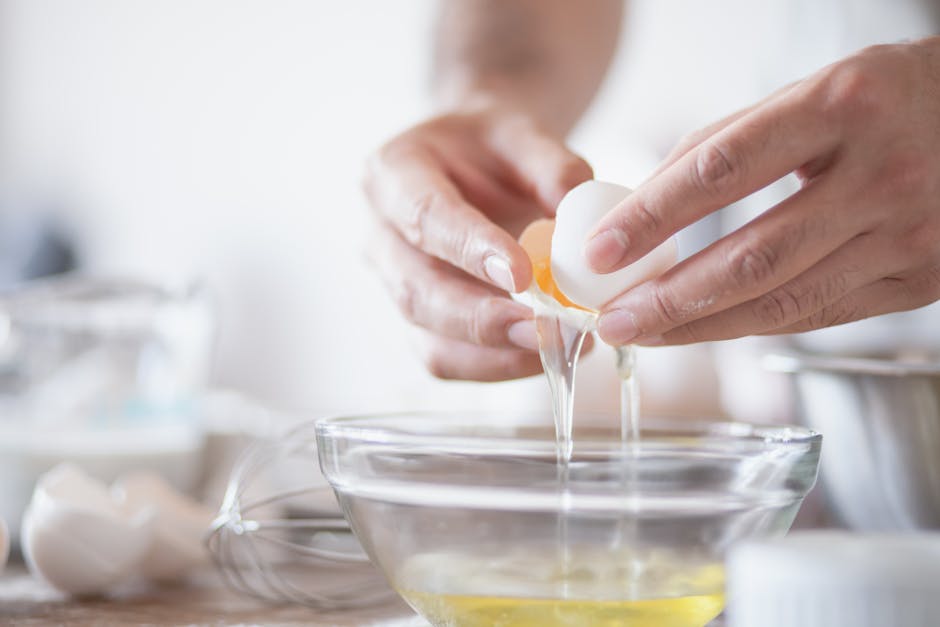
Now, the critical separation step. Hold the cracked egg, with the yolk resting precariously in one half of the shell, over the second bowl. Gently tilt the shell so that the egg white begins to pour out into the second bowl. The goal is to let the majority of the egg white drain away naturally. As you pour, slightly rotate the shell, allowing the viscous white to flow around the yolk. The yolk, due to its density and membrane, will remain relatively stable. The speed of pouring is important; too fast and you risk the yolk slipping out too quickly and potentially breaking. Too slow, and the process becomes tedious. Find a steady, controlled pace.
Once most of the egg white has drained, you will be left with the yolk and a small amount of residual white clinging to it within the shell. This is perfectly normal. You can then carefully transfer the yolk to a third bowl, or directly into the bowl where your separated yolks will be collected. This final transfer can be done by gently scooping the yolk with your hand (ensuring your hand is clean and dry) or by using the edge of the shell to cradle and lift the yolk. Alternatively, you can use a clean spoon to gently scoop the yolk from the shell. The key is to be delicate and avoid any sudden jolts or pressure on the yolk.
For those who prefer not to use their hands directly, a clean spoon is an excellent alternative for the final yolk transfer. After draining the majority of the white, position the spoon beneath the yolk within the shell and gently lift it out. This method provides a good level of control and minimizes direct contact, which some individuals prefer for hygiene or texture reasons.
One of the significant advantages of this pouring method is its efficiency. With practice, you can separate multiple eggs in mere seconds each. This speed is invaluable when a recipe calls for a large quantity of separated eggs, such as for a batch of macarons or a multi-layered cake. Furthermore, the minimal handling involved significantly reduces the likelihood of accidentally breaking the yolk, a common frustration that can necessitate discarding the entire egg or starting the separation process over.
Another benefit of this technique is its simplicity. It doesn’t require specialized gadgets or complicated maneuvers. The only prerequisites are a few bowls and a bit of coordination. This makes it an accessible method for cooks of all skill levels, from beginners to seasoned professionals. The visual aspect of watching the white drain away while the yolk remains intact provides immediate feedback and builds confidence.
To further enhance the speed and ease of this method, consider the temperature of the eggs. Cold eggs are generally easier to separate than room-temperature eggs. The yolk membrane is firmer when cold, making it less prone to breakage during the pouring process. Therefore, if you have the luxury of time, refrigerating your eggs for at least 30 minutes before separating can be a beneficial preparatory step. However, even with room-temperature eggs, the pouring method remains highly effective.
A common pitfall to avoid is cracking the egg too forcefully, which can compromise the yolk’s integrity from the outset. Gentle, controlled cracking is paramount. Another mistake is trying to drain all the egg white from the shell in a single, vigorous pour. This often leads to the yolk being swept out with the white. Patience and a steady hand are key. Don’t rush the draining process; allow the white to flow gradually.
For optimal results, ensure that no trace of yolk contaminates the egg whites. Even a tiny amount of yolk can prevent egg whites from whipping to their full volume, which is critical for recipes like meringues, soufflés, and angel food cake. If you are separating eggs for a recipe that specifically requires whipped egg whites, it’s wise to have your egg white bowl ready and to separate each egg individually, transferring the whites to their final bowl only after you’ve confirmed a clean separation. This way, if one yolk breaks, you only lose that single egg.
If, despite your best efforts, a bit of yolk does find its way into your egg whites, there are a few ways to salvage the situation. The quickest and most effective method is to use a clean, damp paper towel or a small piece of the eggshell. The porous nature of the paper towel or the shell will attract and absorb the yolk, lifting it out of the white. Be gentle and avoid stirring the mixture, as this will further disperse the yolk. Some sources suggest using a spoon, but this can be less efficient for small amounts of dispersed yolk.
For recipes that require many eggs, such as large batches of cookies or cakes, it can be beneficial to adopt a batch separation strategy. Crack and separate one egg at a time into its designated white bowl. Once the separation is confirmed to be clean, add that yolk to a larger bowl where all your separated yolks will be collected. This compartmentalized approach minimizes the risk of contaminating a large batch of whites with a single broken yolk.
The speed of this method also makes it ideal for culinary competitions or busy professional kitchens where efficiency is paramount. The focus on gravity and controlled pouring minimizes the need for complex tools or techniques, making it a universally applicable solution. When time is of the essence, and precision is required, this method stands out as the clear winner.
The SEO benefits of focusing on "fast easy way to separate eggs" are significant. Home cooks and culinary students frequently search for solutions to common kitchen challenges, and egg separation is a perennial one. By using these keywords naturally within the article, and by providing a clear, step-by-step guide with actionable advice, this content will rank well in search engine results, attracting a wider audience seeking practical culinary tips. The emphasis on "fast" and "easy" directly addresses user intent, ensuring that those looking for quick and efficient solutions will find this article to be a valuable resource.
In conclusion, the fastest and easiest way to separate eggs relies on a simple, gravity-assisted pouring technique. By cracking eggs on a flat surface, carefully draining the white, and gently transferring the yolk, you can achieve perfect separations with minimal effort and time. This method is accessible to all skill levels and is invaluable for any cook looking to streamline their kitchen processes and achieve consistent, high-quality results in their culinary endeavors. Mastering this fundamental skill will undoubtedly enhance your cooking experience and lead to more successful and enjoyable meal preparations.
