
Get The Perfect Rope Twist
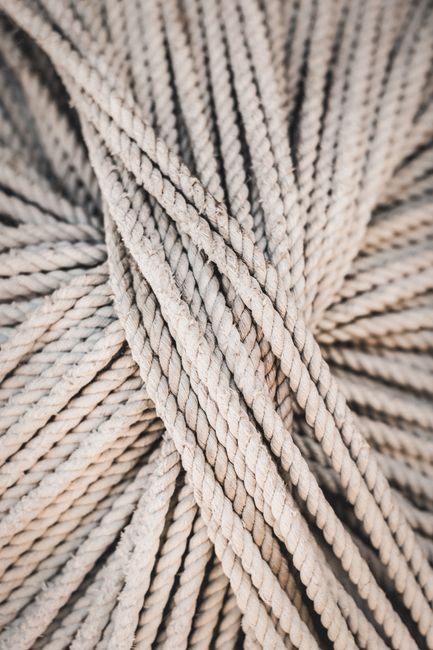
The Perfect Rope Twist: Mastering the Art of Twisting for Strength, Aesthetics, and Functionality
Achieving the perfect rope twist is a fundamental skill with applications ranging from crafting durable sailing ropes and decorative macrame to fashioning resilient climbing gear and aesthetically pleasing artisanal creations. This seemingly simple process of interlacing fibers or strands demands precision, understanding of material properties, and a keen eye for consistency. The inherent strength of a twisted rope lies in the collective forces exerted by each individual strand, which are amplified and redistributed through the tension and friction created by the twist. Understanding the mechanics behind this process is crucial for optimizing performance, ensuring longevity, and achieving desired visual outcomes. The tightness, direction, and consistency of the twist directly influence the rope’s tensile strength, abrasion resistance, flexibility, and overall handling characteristics. For many applications, a uniform twist is paramount. A rope with inconsistent twists will have weak points, making it prone to premature failure under stress. Conversely, an overly tight twist can lead to increased stiffness, making the rope harder to handle and potentially reducing its knot-holding capabilities. The pursuit of the perfect rope twist, therefore, is not merely about aesthetics but a critical factor in the functional integrity and safety of the final product.
The foundational principle of rope twisting is the application of torsional stress to individual fibers or plies. When two or more strands are twisted together, each strand is forced to follow a helical path around the central axis of the rope. This helical path creates inherent tension within each strand as it tries to straighten out. The sum of these tensions, along with the friction between the strands, generates the overall strength of the rope. The direction of the twist, often referred to as lay, plays a significant role. A right-hand lay (S-twist) means the strands spiral upwards to the right, and a left-hand lay (Z-twist) means they spiral upwards to the left. Typically, when multiple strands are twisted to form a rope, a counter-twist is applied. For example, if the individual strands are twisted in a Z-twist, the rope itself will be twisted in an S-twist to create a balanced and stable structure. This counter-twisting prevents the rope from untwisting under its own weight or under load, maintaining its integrity. The number of turns per unit length, known as the twist rate or lay length, is another critical parameter. A higher twist rate generally results in a stronger and more abrasion-resistant rope, but it can also make the rope stiffer and harder to work with. Conversely, a lower twist rate leads to a more flexible rope but can compromise its strength and durability.
Material selection is the first step towards achieving the perfect rope twist. The properties of the fibers or strands being twisted will dictate the optimal twisting technique and the resulting rope’s characteristics. Natural fibers like cotton, hemp, and jute are porous and flexible, making them ideal for softer, more pliable ropes. Their strength is influenced by the length and thickness of the individual fibers. Synthetic fibers, such as nylon, polyester, and polypropylene, offer superior strength, durability, and resistance to environmental factors like moisture and UV radiation. Nylon, for instance, is known for its high tensile strength and elasticity, making it suitable for dynamic loads. Polyester offers excellent abrasion resistance and low stretch, ideal for static applications. Polypropylene is lightweight, buoyant, and resistant to chemicals, making it a good choice for marine or industrial uses. The way these different fibers interact when twisted will vary. For example, smoother synthetic fibers might require a tighter twist to achieve sufficient friction and prevent slippage, while natural fibers might benefit from a slightly looser twist to allow for better flexibility and breathability. Understanding the inherent tensile strength, elongation, friction coefficients, and resistance to degradation of each material is paramount for choosing the right fiber and for determining the appropriate twist parameters to maximize its potential within the twisted rope structure.
The process of achieving a consistent twist begins with meticulous preparation of the individual strands or fibers. For natural fibers, this might involve carding or combing to align the fibers and remove impurities, ensuring a uniform thickness and length. For synthetic fibers, this might involve pre-twisting individual filaments to create stronger yarns, which are then used to form the larger strands. Even distribution of material is key; any variations in thickness or density within a strand will lead to inconsistencies in the final twist, creating weak spots. If you’re working with multiple strands, they must be of equal length and thickness, and properly tensioned before twisting begins. Unequal tension will cause some strands to bear more of the load during the twisting process, leading to an imbalanced and weaker final product. Furthermore, ensuring that the strands are free from kinks, knots, or snags is vital. These imperfections can interrupt the smooth flow of the fibers during twisting, leading to localized stress concentrations and potential breakage. For hand-twisting, it’s often beneficial to slightly dampen natural fibers, as this can improve their pliability and help them conform to the twist more readily without snapping. For synthetic fibers, ensuring they are clean and free from oils or lubricants that might reduce friction is important.
The actual twisting process can be achieved through various methods, from simple hand-twisting to sophisticated machinery. Hand-twisting, often employed for smaller projects or when a specific artisanal aesthetic is desired, involves taking two or more strands and twisting them in opposite directions. This is typically done by holding the strands together at one end and then rotating the other end. The rate of rotation and the distance the hands move apart dictate the twist rate. Consistency is achieved by maintaining a steady hand movement and by periodically checking the tightness and uniformity of the twist. A common hand-twisting technique involves using a hook or a spindle. The strands are attached to the hook, and by rotating the hook, the strands are twisted together. The speed of rotation and the length of the rope being twisted are controlled by the operator. For larger-scale production or when very high strength and uniformity are required, rope-making machines are used. These machines automate the twisting process, ensuring consistent twist rates and tensions. Industrial rope machines employ complex mechanisms with rotating flyers and bobbins to precisely control the lay of the rope. The choice of method often depends on the scale of production, the desired aesthetic, and the required performance characteristics of the final rope. For example, macrame artists might prefer hand-twisting for its control and tactile feedback, while a manufacturer of climbing ropes would rely on automated machinery for its precision and repeatability.
The twist rate, or lay, is a critical parameter that directly influences the rope’s performance. It’s often expressed as the number of twists per unit length (e.g., twists per inch or twists per meter). A common way to determine the optimal twist rate for a given material and application is through empirical testing. However, general guidelines exist. For standard ropes, a twist rate that creates a visible helical pattern without over-tightening is generally preferred. If the twist is too loose, the rope may be prone to unlaying or "blooming" under tension, and its abrasion resistance will be compromised. If the twist is too tight, the rope will become excessively stiff, difficult to knot, and can even reduce its overall tensile strength due to over-stressing of the fibers. For specific applications, the ideal twist rate can vary significantly. For example, a sailing rope that needs to be strong and resistant to abrasion might have a tighter twist than a decorative rope for macrame, which prioritizes flexibility and drape. Similarly, climbing ropes require a specific balance of strength, elasticity, and handling characteristics, and their twist rates are carefully engineered for these properties. The concept of "lay length" is also important. This is the axial length of one complete turn of the lay. A shorter lay length means more twists per unit length, resulting in a tighter rope. Conversely, a longer lay length means fewer twists, resulting in a more flexible rope. For many common ropes, the lay length is approximately 6 to 8 times the diameter of the rope. However, this is a very general guideline, and specific materials and intended uses will necessitate deviations.
Consistency in the twist is paramount for achieving the "perfect" rope. Any variation in the twist rate or tension along the length of the rope will create weak points. This can manifest as areas where the fibers are more tightly packed, leading to over-stressing, or areas where they are looser, making them more susceptible to abrasion and breakage. Achieving consistency requires a steady hand, consistent tension on the strands, and a uniform rate of rotation during the twisting process. When hand-twisting, it’s beneficial to work in sections, periodically checking the uniformity of the twist. For machine-based twisting, precise calibration of the machine’s settings is essential. Regular maintenance and inspection of the twisting machinery are also crucial to prevent mechanical inconsistencies. Visual inspection is a primary method for assessing twist consistency. Look for a uniform helical pattern along the entire length of the rope. The strands should appear to be evenly distributed and uniformly tensioned. Tactile assessment is also important; a well-twisted rope will have a consistent feel throughout, without any areas of noticeable looseness or excessive tightness. If you can easily see individual strands separating or if the rope feels unusually stiff in certain sections, the twist is likely inconsistent. For critical applications, specialized equipment can measure twist uniformity.
The final finishing of a twisted rope can also contribute to its overall perfection and functionality. This might involve applying treatments to enhance durability, water resistance, or UV protection. For natural fiber ropes, finishes can help prevent rot and mildew. For synthetic ropes, coatings can improve abrasion resistance and reduce friction. Seizing the ends of the rope, which involves wrapping them tightly with twine or tape, is crucial to prevent the twist from unraveling. This prevents the individual strands from splaying out, maintaining the rope’s structural integrity and preventing it from losing its twist. Different seizing techniques exist, depending on the rope material and its intended use. For example, a simple whipping might suffice for a decorative rope, while a more robust seizing technique would be required for a load-bearing rope. Similarly, techniques like back-splicing or eye-splices can be used to create permanent loops at the ends of the rope, further reinforcing its structure and providing a functional attachment point. The choice of finishing technique should be considered during the design phase of the rope, taking into account the material, the twisting method, and the intended application to ensure that the rope’s performance and longevity are maximized.
Troubleshooting common issues is an integral part of mastering the rope twist. One frequent problem is unevenness, where the rope appears lumpy or inconsistent. This can often be traced back to unequal tension in the strands before or during twisting, or to variations in the material itself. The solution involves carefully unraveling the affected section, re-tensioning the strands evenly, and re-twisting with a more consistent hand motion or machine setting. Another issue is over-twisting, which results in a stiff and brittle rope. This is typically corrected by untwisting the affected section to a slightly looser lay. Conversely, under-twisting leads to a rope that is too flexible and prone to unraveling. This requires re-twisting to a tighter lay. If the rope consistently unravels, it indicates insufficient twist or improper finishing. Increasing the twist rate and ensuring secure end-finishing techniques like proper seizing are crucial. Abrasion resistance can be improved by increasing the twist rate, which tightens the strands and reduces their exposure to external friction. For synthetic fibers, specific coatings or treatments can also significantly enhance abrasion resistance. Understanding the interplay between material properties, twist parameters, and intended use allows for effective troubleshooting and optimization. The pursuit of the perfect rope twist is an ongoing process of learning, experimentation, and refinement, leading to ropes that are not only functional and strong but also aesthetically pleasing and durable.
