
Category Weather And Climate
Weather vs. Climate: Deciphering Atmospheric Conditions for Informed Decision-Making
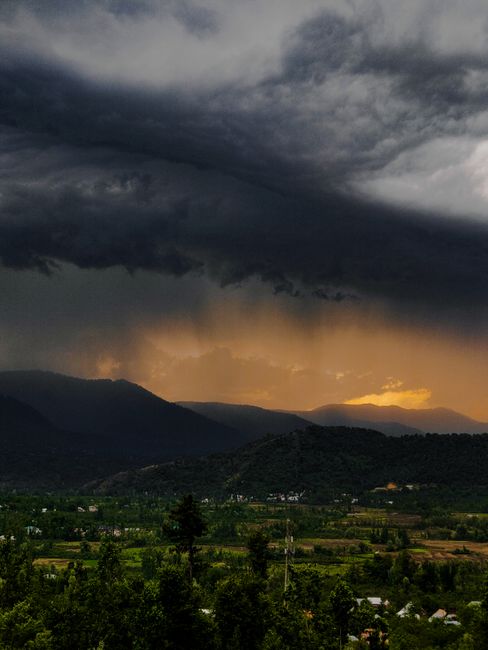
The distinction between weather and climate is fundamental to understanding atmospheric phenomena, their impacts, and the strategies employed to address them. While often used interchangeably in casual conversation, these terms represent distinct temporal and spatial scales of atmospheric behavior. Weather refers to the short-term, day-to-day, or even hour-to-hour state of the atmosphere at a specific location. It encompasses variables such as temperature, precipitation (rain, snow, hail), humidity, wind speed and direction, atmospheric pressure, and cloud cover. Weather is highly variable and can change rapidly. For instance, a sunny morning can quickly transition to a stormy afternoon. Understanding current weather conditions is crucial for immediate decision-making, such as planning outdoor activities, commuting, or ensuring public safety during extreme weather events like hurricanes, blizzards, or heatwaves. Meteorological services worldwide dedicate significant resources to observing, forecasting, and communicating weather patterns, utilizing a vast network of ground-based sensors, weather balloons, radar systems, and satellite imagery. The accuracy of weather forecasts decreases with increasing time horizon; while short-term forecasts (a few hours to a couple of days) are generally quite reliable, forecasts beyond a week become significantly less precise due to the chaotic nature of the atmosphere. Factors influencing weather include the Earth’s rotation, solar radiation, atmospheric pressure gradients, and the presence of moisture. Global weather patterns are interconnected, meaning a weather system in one region can influence conditions elsewhere, albeit with diminishing effects over distance and time. The study of weather, meteorology, has evolved dramatically with advancements in technology, enabling more sophisticated modeling and prediction.
Climate, in contrast, represents the long-term average of weather patterns in a particular region over extended periods, typically 30 years or more. It describes the statistical distribution of weather variables, providing a picture of the typical conditions one can expect in a given location across seasons and years. Climate encompasses not only the average values of temperature and precipitation but also their variability, frequency of extreme events, and the probability of certain weather phenomena occurring. For example, a region might have a tropical climate characterized by high average temperatures and significant rainfall year-round, or a desert climate defined by low average precipitation and extreme diurnal temperature variations. Climate is influenced by a complex interplay of factors, including latitude, altitude, proximity to large bodies of water, ocean currents, atmospheric circulation patterns, and geographical features such as mountain ranges. Global climate is also profoundly affected by the Earth’s orbit, solar output, volcanic activity, and, more recently and significantly, anthropogenic emissions of greenhouse gases. Understanding climate is essential for long-term planning in sectors such as agriculture, water resource management, urban planning, infrastructure development, and energy production. Climate change, a significant shift in these long-term averages and patterns, has become a paramount global concern. Scientists study climate through paleoclimate records (e.g., ice cores, tree rings, sediment layers) and continuous instrumental observations, employing sophisticated climate models to project future climate scenarios. The Intergovernmental Panel on Climate Change (IPCC) is a leading international body that assesses the scientific literature on climate change.
The distinction between weather and climate is vital for effective communication and policy-making, particularly in the context of climate change. Attributing a single extreme weather event, such as a heatwave or a flood, solely to climate change can be scientifically challenging. However, climate change can influence the frequency, intensity, and duration of such events. For instance, as global temperatures rise due to increased greenhouse gas concentrations, heatwaves are projected to become more frequent and severe in many regions. Similarly, changes in atmospheric moisture content and circulation patterns can influence the likelihood of intense rainfall events, contributing to increased flood risk. This nuanced understanding prevents misinterpretations and allows for evidence-based decision-making. For example, while a severe snowstorm in a particular winter might be a manifestation of short-term weather variability, a consistent trend of milder winters over decades would indicate a change in climate. This difference in temporal scale is crucial for discerning natural climate variability from the impacts of human-induced climate change. Meteorological organizations and climate research institutions work collaboratively to gather and analyze data, refine predictive models, and inform the public and policymakers about both immediate weather concerns and long-term climate trends. The ongoing collection of comprehensive weather data over decades and centuries provides the foundation for understanding and projecting climate.
The Earth’s atmosphere is a dynamic system driven primarily by solar energy. This energy, unevenly distributed across the globe due to the Earth’s spherical shape and axial tilt, creates temperature gradients that drive atmospheric circulation. Solar radiation is absorbed and reflected by the Earth’s surface, atmosphere, and clouds, influencing local and regional temperatures. Atmospheric pressure differences, arising from variations in temperature and air density, generate winds as air moves from high-pressure to low-pressure areas. The Coriolis effect, a consequence of the Earth’s rotation, deflects these winds, leading to large-scale atmospheric circulation patterns like the jet streams and trade winds. These global patterns play a significant role in shaping regional weather and climate. For example, the Hadley, Ferrel, and Polar cells describe large-scale vertical and horizontal air movements that influence the distribution of precipitation and temperature across different latitudes. The presence of moisture in the atmosphere is critical for precipitation. Water evaporates from oceans, lakes, and land surfaces, forming clouds. When atmospheric conditions are conducive, water vapor condenses and falls back to Earth as rain, snow, sleet, or hail. Humidity, the amount of water vapor in the air, directly influences the potential for precipitation and the feeling of temperature (e.g., high humidity makes hot weather feel hotter). Atmospheric pressure also plays a key role. Low-pressure systems are generally associated with unsettled weather, clouds, and precipitation, while high-pressure systems typically bring clear skies and stable conditions.
Ocean currents are another critical component influencing global weather and climate. The vast oceans absorb and transport enormous amounts of heat, moderating coastal temperatures and influencing atmospheric moisture content. Major ocean currents, like the Gulf Stream, can transport warm water over long distances, leading to milder climates in regions that would otherwise be colder. Conversely, cold currents can cool coastal areas. El Niño-Southern Oscillation (ENSO) is a prominent example of how ocean-atmosphere interactions can lead to significant global weather and climate anomalies. ENSO is characterized by fluctuations in sea surface temperatures in the central and eastern tropical Pacific Ocean, which in turn influence atmospheric circulation patterns worldwide, leading to altered rainfall and temperature regimes in diverse regions.
Geographical features also exert substantial influence on local and regional weather and climate. Mountain ranges act as physical barriers, forcing air masses to rise, cool, and release moisture on their windward slopes (orographic precipitation), creating rain shadows on their leeward sides. The presence of large bodies of water, such as oceans and large lakes, moderates temperature fluctuations, leading to more temperate climates in coastal areas compared to inland regions at the same latitude. Urban areas, with their dense construction and heat-absorbing surfaces, experience the "urban heat island" effect, where temperatures are significantly higher than surrounding rural areas, impacting local weather patterns and energy consumption. Vegetation cover also plays a role through evapotranspiration, the process by which plants release water vapor into the atmosphere, influencing local humidity and precipitation. Deforestation, for instance, can alter these processes and lead to changes in regional climate.
The study of past climates, paleoclimatology, provides invaluable insights into the natural variability of Earth’s climate system and the long-term impacts of various drivers. Techniques such as analyzing ice cores from polar regions allow scientists to reconstruct past atmospheric composition (including greenhouse gas concentrations), temperature, and precipitation patterns over hundreds of thousands of years. Tree rings (dendrochronology) offer a more localized record of climate conditions, reflecting annual variations in temperature and moisture. Analyzing sediment cores from ocean floors and lakebeds can reveal information about past ocean currents, volcanic activity, and vegetation changes. These paleoclimate records demonstrate that Earth’s climate has undergone significant natural shifts throughout history, including periods of warming and cooling, glacial epochs, and interglacial periods. Understanding these past natural variations is crucial for distinguishing them from current anthropogenic climate change and for validating climate models. For example, past periods of elevated greenhouse gas concentrations, even without human influence, were associated with warmer global temperatures. However, the rate of current warming and the unprecedented levels of atmospheric CO2 are directly attributable to human activities.
The primary drivers of Earth’s climate system, both past and present, can be categorized into natural and anthropogenic factors. Natural factors influencing climate include variations in solar output (though these are relatively small and cyclic), volcanic eruptions (which can inject aerosols into the stratosphere, causing temporary cooling), and changes in Earth’s orbital parameters (Milankovitch cycles), which operate on very long timescales and are responsible for glacial-interglacial cycles over tens of thousands of years. However, the most significant driver of current climate change is anthropogenic. The burning of fossil fuels (coal, oil, and natural gas) for energy production, transportation, and industrial processes releases vast quantities of greenhouse gases, primarily carbon dioxide (CO2), into the atmosphere. Deforestation further exacerbates this problem by reducing the Earth’s capacity to absorb CO2. Other greenhouse gases, such as methane (CH4) from agriculture and livestock, and nitrous oxide (N2O) from agricultural practices and industrial processes, also contribute to the warming effect. These gases trap heat in the atmosphere, leading to a gradual increase in global average temperatures.
The observed consequences of this warming are far-reaching and increasingly evident. Rising global temperatures are leading to the melting of glaciers and ice sheets, contributing to sea-level rise. This poses a significant threat to coastal communities and ecosystems. Changes in precipitation patterns are becoming more pronounced, with some regions experiencing more intense droughts and others facing increased risks of flooding. The frequency and intensity of extreme weather events, such as heatwaves, hurricanes, and wildfires, are also showing discernible trends that align with climate model projections. Ocean acidification, caused by the absorption of excess CO2 from the atmosphere, threatens marine life, particularly coral reefs and shellfish. These impacts have profound implications for human societies, including food security, water availability, public health, and economic stability.
Addressing climate change requires a multifaceted approach, encompassing both mitigation and adaptation strategies. Mitigation involves reducing greenhouse gas emissions to slow down the rate of warming. This includes transitioning to renewable energy sources, improving energy efficiency, developing sustainable transportation systems, and implementing carbon capture technologies. Adaptation involves adjusting to the actual or expected future climate. This can include building seawalls to protect coastal areas from sea-level rise, developing drought-resistant crops, improving water management systems, and strengthening early warning systems for extreme weather events. International cooperation is essential for effective climate action, as evidenced by agreements like the Paris Agreement, which aims to limit global warming to well below 2 degrees Celsius above pre-industrial levels, and pursuing efforts to limit it to 1.5 degrees Celsius. The scientific understanding of weather and climate, and the impacts of human activities on the latter, forms the bedrock of informed decision-making for a sustainable future. Continued research, accurate data collection, and effective communication are paramount in navigating the challenges posed by our changing planet.
