
How Not To Use Exercise Balls
The Perils of Improper Exercise Ball Usage: Avoiding Injury and Maximizing Benefits
The exercise ball, also known as a stability ball, Swiss ball, or yoga ball, has become a ubiquitous piece of fitness equipment, lauded for its ability to enhance core strength, improve balance, and add an element of dynamic challenge to workouts. However, its very versatility and inherent instability also present a significant risk of injury if not used correctly. This comprehensive guide will meticulously detail the common pitfalls and erroneous techniques that can lead to adverse outcomes, empowering individuals to approach exercise ball training with caution, knowledge, and a focus on safety. Understanding these "don’ts" is paramount to unlocking the genuine benefits of this versatile tool, rather than succumbing to preventable harm.
1. Over-Inflating the Ball: The Rock-Hard Hazard
A common mistake, particularly for beginners, is over-inflating the exercise ball. An over-inflated ball becomes rigid and loses its ability to adapt to the body’s movements. This rigidity transforms the intended instability challenge into a fixed, unyielding surface. When attempting exercises like planks, crunches, or bridges on an over-inflated ball, the body has less natural give and support. This can lead to excessive strain on joints, particularly the wrists, elbows, and shoulders, as they are forced to compensate for the ball’s lack of pliability. Furthermore, over-inflation significantly reduces the proprioceptive feedback the ball is designed to provide. Proprioception, the body’s awareness of its position in space, is a key benefit of exercise ball training. With a rigid ball, this sensory input is diminished, hindering the development of core stability and control. Instead of engaging the deep stabilizing muscles, users might find themselves relying more on superficial muscle groups to maintain balance, leading to inefficient training and a higher risk of muscle strains. The ideal inflation level allows the ball to deform slightly under pressure, conforming to the body and providing a more responsive and supportive base. A good rule of thumb is that when seated on the ball, your hips should be slightly higher than your knees, with your thighs parallel to the floor.
2. Under-Inflating the Ball: The Wobbling Threat
Conversely, an under-inflated ball presents a different set of dangers. While it might seem more forgiving, an under-inflated ball is excessively unstable and unpredictable. It lacks the structural integrity to provide adequate support, leading to uncontrolled rolling and tilting. This extreme instability can cause abrupt shifts in body position, forcing the user to react defensively rather than actively engaging their core. Such rapid, uncontrolled movements significantly increase the risk of falls, sprains, and strains, especially in the ankles, knees, and lower back. When performing exercises like seated twists or leg curls, an under-inflated ball can cause the pelvis to tilt uncontrollably, putting undue stress on the lumbar spine. The lack of consistent resistance also compromises the intended muscle activation. Instead of a controlled challenge, the muscles are constantly in a state of reactive imbalance, leading to fatigue and potential injury from overexertion or improper form. The ball should offer a challenge, but not a constant battle against an unpredictable, deflated surface.
3. Neglecting Proper Form and Technique: The Recipe for Disaster
The exercise ball is a tool, and like any tool, its effectiveness and safety are directly tied to the user’s understanding of how to wield it. A fundamental error is attempting complex exercises without mastering the foundational movements on the floor first. For instance, attempting a dynamic push-up on an exercise ball without first being able to perform a stable push-up on the ground is a recipe for disaster. This lack of prerequisite strength and body awareness makes it nearly impossible to maintain proper alignment and control on the unstable surface. Furthermore, users often rush through exercises, prioritizing speed over quality of movement. This haste leads to compromised form, such as rounding the back during crunches, hyperextending the neck, or allowing the hips to sag during planks. These deviations from correct biomechanics place excessive stress on vulnerable areas of the body. It is crucial to focus on slow, controlled movements, engaging the target muscles, and maintaining neutral spinal alignment throughout each repetition. Seeking guidance from a qualified fitness professional to learn proper exercise ball techniques is highly recommended, especially for individuals with pre-existing conditions or those new to this type of training.
4. Ignoring Body Signals: Pushing Through Pain
The human body is equipped with an intricate system of signals, with pain being a primary indicator of distress or potential injury. A significant mistake when using exercise balls is the tendency to ignore these signals, often driven by a desire to push through perceived discomfort or a lack of understanding about what constitutes safe exertion versus harmful pain. Exercise balls, due to their instability, can magnify minor imbalances or predispositions to injury. If an exercise elicits sharp, sudden, or persistent pain, it is a clear signal to stop immediately. Continuing to push through such pain can exacerbate existing issues, leading to more severe injuries like muscle tears, ligament sprains, or disc problems. It is vital to differentiate between the mild muscle fatigue and exertion that comes with effective exercise and the acute, sharp pain that signals a problem. Listening to your body and modifying or ceasing an exercise when pain arises is not a sign of weakness but a crucial act of self-preservation and intelligent training.
5. Using the Ball for Exercises Requiring Fixed Support: The Misapplication of Functionality
Exercise balls are designed for dynamic movement and core engagement through instability. Misapplying them to exercises that inherently require a fixed, stable base can be detrimental. For example, using an exercise ball as a substitute for a weight bench during bench presses is extremely dangerous. The ball’s inherent instability makes it impossible to achieve a secure and balanced position for lifting heavy weights, drastically increasing the risk of the weights falling or the user losing control and suffering serious injury. Similarly, using the ball for exercises that necessitate a rigid spine, such as certain advanced yoga poses or rehabilitation exercises, can be counterproductive and harmful if not performed under strict, expert supervision. The ball’s role is to challenge stability, not to replace the fundamental need for a stable foundation in exercises where that stability is paramount for safety and effectiveness. Understanding the specific purpose and limitations of the exercise ball is key to selecting appropriate exercises and avoiding misapplications.
6. Improper Ball Size Selection: Mismatching Tool to User
The efficacy and safety of exercise ball workouts are heavily dependent on selecting a ball that is the correct size for the individual user. Using a ball that is too large or too small can lead to improper biomechanics and increased risk of injury. If the ball is too large, it will be difficult to achieve the correct seating position where the hips are slightly higher than the knees, potentially leading to excessive lumbar extension and strain. Conversely, a ball that is too small will force the user into a more rounded posture, which can be detrimental for spinal health. For most exercises performed while seated, the ideal is to have your thighs parallel to the floor and your hips slightly higher than your knees. For exercises performed lying on the ball, the body should be in a neutral, aligned position. When in doubt, it is always best to err on the side of a slightly larger ball and adjust inflation, or to seek professional advice on appropriate sizing. A properly sized ball ensures that the body is in an optimal position to engage the correct muscles and maintain proper alignment, maximizing benefits and minimizing risks.
7. Neglecting Progression: Jumping to Advanced Movements Too Soon
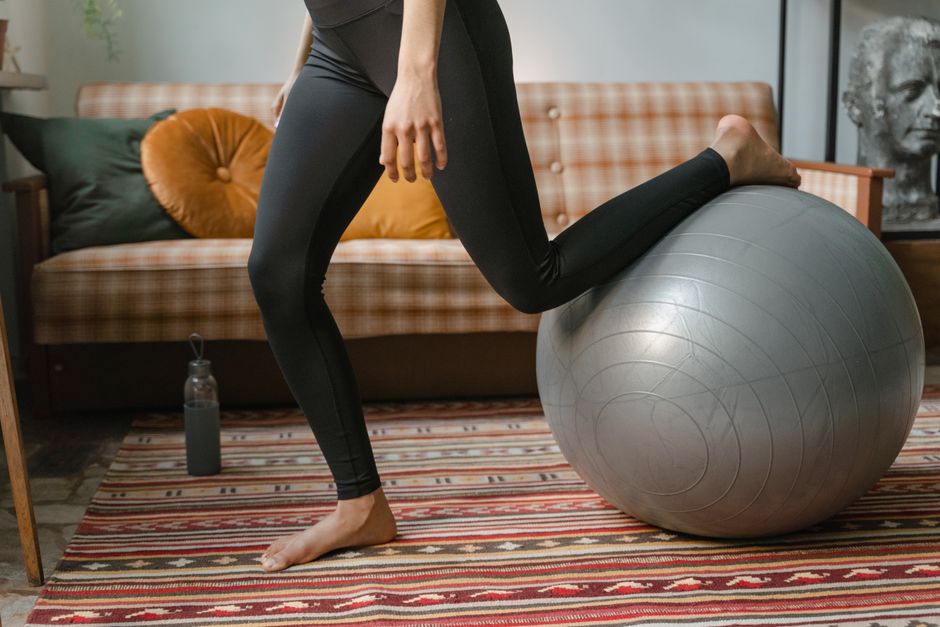
The allure of advanced exercises is strong, but for exercise ball training, it often leads to unintended consequences. Jumping into complex movements without building a solid foundation of basic stability and control is a common and hazardous error. Exercises like single-leg squats on the ball, or advanced core work that involves significant limb movement, require a high degree of proprioception, balance, and core strength. Attempting these before mastering simpler exercises like basic planks, bridges, or seated torso twists on the ball can lead to a loss of control, poor form, and potential injury. The principle of progressive overload applies not just to weight but also to complexity and instability. Start with exercises that challenge your stability in a manageable way and gradually progress to more demanding movements as your strength, control, and confidence improve. This methodical approach ensures that your body is adequately prepared for the increased demands, fostering safe and effective progress.
8. Over-Reliance on the Ball for Every Exercise: Limiting Range of Motion and Stimulus
While versatile, the exercise ball is not a panacea for all fitness needs. Over-reliance on the ball for every exercise can lead to a limited range of motion and a failure to adequately stimulate muscles through their full potential. For instance, performing squats solely on the ball might limit the depth achievable compared to barbell squats, thus not fully engaging the glutes and quadriceps. Similarly, relying on the ball for all abdominal work might neglect the benefits of floor-based exercises like dead bugs or bird-dogs which offer different planes of movement and proprioceptive challenges. Different exercises recruit muscles in varied ways and through different ranges of motion. A balanced fitness program incorporates a variety of tools and modalities to provide comprehensive muscular development and functional strength. Utilizing the exercise ball strategically to enhance specific aspects of fitness, such as core stability and balance, is its greatest strength. Broadly applying it to every conceivable exercise can lead to a suboptimal stimulus and a failure to address all aspects of physical conditioning.
9. Inadequate Warm-up and Cool-down: Preparing the Body for and Recovering from Dynamic Stress
The dynamic nature of exercise ball workouts places unique demands on the musculoskeletal system. Neglecting proper warm-up and cool-down protocols before and after using the exercise ball significantly elevates the risk of injury. A dynamic warm-up prepares the muscles, joints, and nervous system for the increased instability and range of motion involved in ball exercises. This could include light cardio, dynamic stretching like arm circles and leg swings, and preparatory movements on the ball itself at a lower intensity. Skipping this crucial step leaves the body vulnerable to strains and sprains. Similarly, a cool-down helps the body gradually return to a resting state, aids in muscle recovery, and improves flexibility. Static stretching targeting the muscles worked during the session, particularly the core, back, and hips, is essential. Without adequate preparation and recovery, the body is more susceptible to overuse injuries and muscle soreness that can impede future workouts.
10. Unsafe Environment and Placement: The Foundation of Accidental Injury
Beyond the mechanics of the exercise itself, the surrounding environment plays a critical role in exercise ball safety. Using an exercise ball in a cluttered space with tripping hazards, near sharp objects, or on an uneven or slippery surface significantly increases the risk of accidental injury. The ball, by its nature, can roll unexpectedly. If it rolls into a piece of furniture or off a slippery floor, it can cause the user to fall or lose balance catastrophically. It is imperative to clear ample space around the exercise area, ensuring a stable and non-slip surface. If the ball is being used for leg exercises where it is positioned behind the user, ensure there is adequate space for it to roll freely without obstruction. The ball should also be placed on a stable surface, not on a rug that can bunch up or a polished floor that offers little friction. A safe environment is the foundational layer of protection that complements proper technique and body awareness.
