
The Gentle Cow Of The Sea
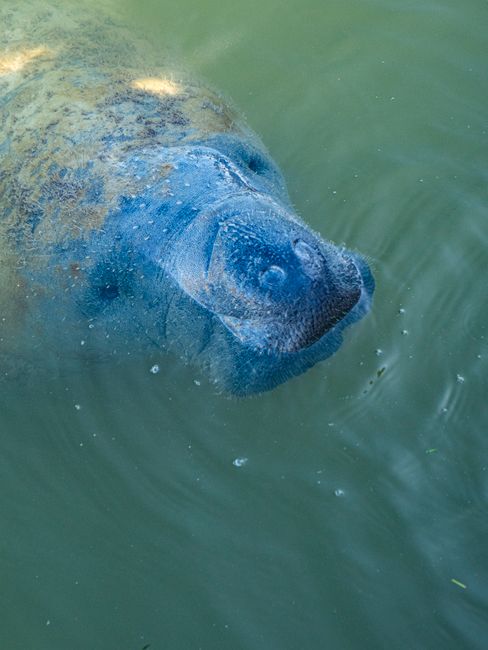
The Gentle Giants of the Ocean: Unveiling the Secrets of the Dugong
The dugong, Dugong dugon, a placid marine mammal, holds a unique and often overlooked position within the ocean’s diverse ecosystems. Often referred to as the "gentle cow of the sea" due to its herbivorous diet and slow, deliberate movements, the dugong is a fascinating creature with a rich evolutionary history and a crucial role in maintaining the health of seagrass meadows. This article delves into the biology, behavior, habitat, conservation status, and cultural significance of the dugong, aiming to provide a comprehensive and SEO-friendly overview for a wide audience interested in marine life and conservation.
The dugong belongs to the order Sirenia, a group of herbivorous aquatic mammals that also includes manatees. Unlike manatees, which are found in the Atlantic and East Pacific oceans, dugongs are exclusively distributed throughout the Indo-Pacific region. Their scientific name, Dugong dugon, is derived from the Malay word "duyung," meaning "lady of the sea." This moniker reflects their graceful, though often hidden, presence in shallow coastal waters. Physically, dugongs are characterized by their fusiform body, powerful fluke-like tail, paddle-like forelimbs, and a distinctively downwards-facing snout, adapted for grazing on benthic vegetation. Adults typically range from 2.4 to 3 meters in length and can weigh between 250 and 420 kilograms, though larger individuals have been recorded. Their skin is thick, leathery, and usually grayish-brown, often adorned with algae, providing a degree of camouflage within their environment. Perhaps their most striking feature, particularly in mature males, are the tusks – enlarged incisor teeth that protrude from the upper jaw. These tusks play a role in social interactions and possibly in territorial displays.
The dugong’s diet is strictly herbivorous, consisting almost entirely of seagrasses. This specialized feeding habit places them as keystone herbivores, significantly influencing the structure and health of seagrass ecosystems. Dugongs employ a unique grazing technique, using their sensitive snouts to uproot or shear seagrasses close to the rhizome. This method, while appearing destructive, actually promotes seagrass regeneration. By preventing overcrowding and stimulating new growth, dugong grazing helps maintain a diverse and healthy seagrass bed, which in turn supports a myriad of other marine life, from small invertebrates to commercially important fish species. Their feeding activity also churns up sediments, releasing nutrients that can benefit seagrass growth and prevent anaerobic conditions. The dugong’s digestive system is adapted to process fibrous seagrasses, featuring a long digestive tract and a specialized stomach to extract nutrients efficiently. They can consume significant amounts of seagrass daily, often spending many hours foraging. Their feeding patterns are influenced by tides, with foraging typically occurring during high tides when seagrass meadows are submerged and accessible.
Dugongs are generally solitary or live in small, transient groups, although larger aggregations have been observed in areas with abundant food resources. Their social structure is not well understood, but they are not known to form complex social bonds like some other marine mammals. Reproduction in dugongs is a slow process, contributing to their vulnerability. Females typically reach sexual maturity between 10 and 17 years of age and give birth to a single calf every 3 to 7 years. The gestation period is approximately 11 to 12 months. Calves are born in shallow water and are immediately capable of swimming. They nurse from their mother’s teats, located in the pectoral axillae, for an extended period, up to 18 months or even longer. This prolonged period of maternal care signifies a significant investment and highlights the vulnerability of calves to predation and environmental threats. Dugongs are relatively long-lived, with lifespans estimated to be over 70 years in the wild, underscoring the generational impact of their decline.
The habitat of the dugong is intrinsically linked to the presence of seagrass meadows. They prefer shallow, warm, tropical and subtropical waters, typically found in protected bays, estuaries, and along coastlines with extensive seagrass beds. These areas provide both food and refuge from predators. Dugongs are also known to inhabit coral reefs and mangrove systems where seagrasses are present. Their distribution spans over 40 countries across the Indo-Pacific, from East Africa to the western Pacific islands, including Australia, Southeast Asia, the Red Sea, and the Persian Gulf. However, their populations are fragmented and declining in many parts of their range. The health of these coastal environments is paramount to the survival of the dugong, making them an important indicator species for the health of these valuable marine habitats.
The conservation status of the dugong is of serious concern. Globally, the species is listed as Vulnerable by the International Union for Conservation of Nature (IUCN), with several regional populations considered Endangered or Critically Endangered. The primary threats to dugongs are multifaceted and largely anthropogenic. Habitat degradation and loss, primarily due to coastal development, pollution, and destructive fishing practices, are significant drivers of decline. The destruction of seagrass meadows through dredging, trawling, and nutrient runoff starves the dugongs of their food source and reduces their habitat. Bycatch in fishing gear, such as gillnets and trawl nets, is another major cause of mortality. Dugongs, with their slow swimming speed and reliance on surfacing for air, are particularly susceptible to entanglement. Boat strikes, especially in busy waterways, also pose a threat. Climate change, with its associated sea-level rise, ocean acidification, and increased frequency of extreme weather events, further exacerbates these threats by impacting seagrass health and availability.
Human activities have long impacted dugong populations. Historically, dugongs were hunted for their meat, blubber, and bones, leading to significant declines in many areas. Although commercial hunting has largely ceased, illegal hunting and poaching still occur in some regions. Indigenous communities in some parts of the dugong’s range have a traditional cultural relationship with these animals, often including sustainable hunting practices. However, the pressures of modernization and increased demand can strain these traditions and contribute to unsustainable exploitation. The cultural significance of the dugong extends beyond subsistence. In many indigenous cultures, dugongs are viewed with respect and feature in folklore, art, and ceremonies. They are often seen as symbols of the ocean and its bounty. Understanding and respecting these cultural connections is vital for effective conservation efforts.
Conservation efforts for dugongs are varied and often involve a combination of research, habitat protection, and community engagement. Marine protected areas (MPAs) that encompass critical seagrass habitats are crucial for safeguarding dugong populations. Regulations aimed at reducing bycatch, such as modifications to fishing gear and fishing exclusion zones, are also important. Public awareness campaigns help to educate coastal communities and the wider public about the importance of dugongs and the threats they face. Collaborative research, including population surveys, genetic studies, and monitoring of seagrass health, provides essential data for informing conservation strategies. The Dugong and Seagrass Conservation Project, a global initiative, has been instrumental in raising awareness and supporting conservation actions in various countries. Addressing the root causes of habitat degradation, such as pollution and unsustainable coastal development, is fundamental to long-term dugong survival.
The dugong’s role as a keystone herbivore in seagrass ecosystems cannot be overstated. These underwater meadows are vital nurseries for countless marine species, including many of commercial importance. They also play a crucial role in carbon sequestration, helping to mitigate climate change. By grazing on seagrass, dugongs help to maintain the productivity and biodiversity of these critical habitats. Their presence is a testament to the health and resilience of coastal marine environments. Conversely, declining dugong populations can signal an unhealthy ecosystem, prompting further investigation into the factors affecting seagrass meadows. The slow reproductive rate of dugongs makes them particularly susceptible to population declines, and their recovery is a long and arduous process. This necessitates a proactive and sustained approach to conservation.
The future of the dugong hinges on a concerted global effort to protect their essential seagrass habitats and mitigate the myriad threats they face. Effective conservation requires a multidisciplinary approach, integrating scientific research, policy development, and the active participation of local communities. Sustainable management of coastal resources, reduction of pollution, and the implementation of responsible fishing practices are paramount. Education and awareness play a critical role in fostering a sense of stewardship for these gentle giants of the sea. By understanding the ecological importance of dugongs and the challenges to their survival, we can work towards ensuring their continued presence in the world’s oceans for generations to come. Their story is intertwined with the health of our coastal ecosystems, serving as a powerful reminder of the interconnectedness of life in the marine realm. The continued survival of the dugong is a critical indicator of the overall well-being of the Indo-Pacific’s coastal environments.
The evolutionary journey of the dugong places it within the mammalian lineage, diverging from terrestrial ancestors millions of years ago to adapt to an entirely aquatic existence. Fossil records suggest that sirenians, the order to which dugongs belong, originated in the Tethys Sea, an ancient ocean that once covered much of the area now occupied by the Mediterranean, Middle East, and parts of Asia. This ancient lineage has witnessed significant geological and climatic changes, with sirenians adapting to varying marine environments. The distinct adaptations of the dugong, such as its specialized snout for bottom-feeding and its dense bones for buoyancy control, are testaments to this long evolutionary process. Understanding this deep history provides context for their current ecological niche and vulnerabilities. The resilience shown by their ancestors over millennia highlights the severity of the current anthropogenic pressures threatening their survival.
The intricate relationship between dugongs and their seagrass food source is a prime example of ecological interdependence. Seagrasses themselves are highly productive flowering plants that have adapted to marine life, forming extensive meadows that are vital for coastal biodiversity. These meadows act as natural breakwaters, reducing wave energy and stabilizing shorelines. They also serve as critical carbon sinks, absorbing significant amounts of atmospheric carbon dioxide and playing a role in mitigating climate change. Dugongs, as the primary large herbivores of these ecosystems, exert a significant influence on seagrass community structure and dynamics. Their grazing patterns can influence species composition, promote nutrient cycling, and prevent the overgrowth of certain seagrass species. Without dugongs, the health and resilience of these vital underwater forests would likely be compromised, leading to cascading effects throughout the marine food web. The continued degradation of seagrass meadows, therefore, directly threatens the existence of the dugong.
The sensory world of the dugong is adapted for its aquatic environment. While their eyesight is not considered exceptional, they possess a keen sense of touch, particularly through the sensitive vibrissae (whiskers) on their snout, which aid in foraging and detecting prey or obstacles. Their hearing is well-developed, enabling them to detect a range of sounds in the water, which is important for communication and predator avoidance. Dugongs are believed to communicate through a variety of sounds, including chirps, whistles, and squeals, although their vocal repertoire and its specific meanings are still areas of ongoing research. Their movement through the water is slow and deliberate, conserving energy and allowing for careful navigation of their environment. This placid nature, while contributing to their gentle image, also makes them vulnerable to faster-moving threats.
The ecological role of the dugong extends beyond just maintaining seagrass health. Their foraging activities can help to aerate the sediment, releasing trapped nutrients and promoting the growth of benthic invertebrates, which in turn serve as food for other marine animals. The physical disturbance of the seafloor by their grazing can create a mosaic of habitats within the seagrass beds, increasing overall biodiversity. Furthermore, dugongs can act as biological indicators of environmental health. A thriving dugong population suggests healthy seagrass meadows and a relatively unpolluted marine environment. Conversely, a declining population can signal significant underlying environmental problems that require urgent attention. Their sensitivity to changes in water quality and habitat availability makes them valuable sentinels of the health of our oceans.
The concept of "rewilding" marine environments is gaining traction, and the dugong, as a charismatic megafauna and a crucial ecosystem engineer, is a prime candidate for such initiatives. Restoring degraded seagrass meadows and reintroducing dugongs to areas where they have been extirpated, where ecologically appropriate and sustainably managed, could have profound positive impacts on coastal ecosystem health. Such ambitious projects would require extensive scientific research, rigorous threat mitigation, and strong community partnerships to be successful. The re-establishment of healthy dugong populations would not only benefit the marine environment but also potentially revive traditional cultural practices and ecotourism opportunities, providing economic incentives for conservation.
The challenges facing the dugong are significant, but so too are the opportunities for positive change. By fostering a greater understanding of these remarkable creatures and the vital ecosystems they inhabit, we can inspire action. Support for conservation organizations, advocacy for stronger marine protection policies, and the adoption of sustainable practices in coastal communities are all critical steps. The gentle cow of the sea, a symbol of tranquility and the health of our oceans, deserves our attention and our commitment to ensuring its future. Their continued existence is not merely a matter of preserving a species; it is a reflection of our commitment to the health and vitality of the planet’s marine ecosystems.
