
These Kids Are Amazing
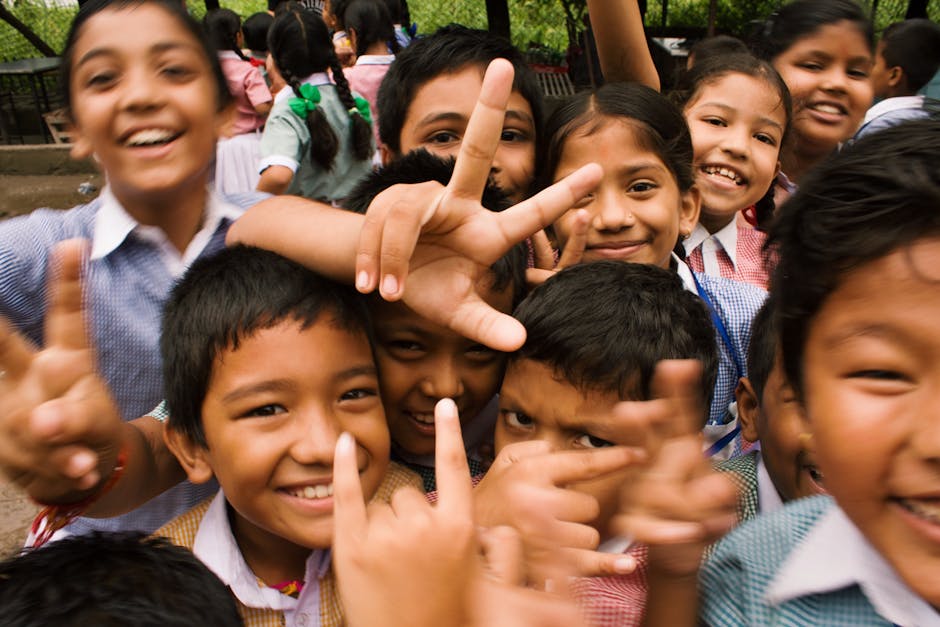
Unlocking the Extraordinary: Witnessing the Astonishing Capabilities of Today’s Youth
The phrase "kids are amazing" is not mere sentimentality; it is a starkly accurate observation of the remarkable, often underestimated, capabilities inherent in children and adolescents. In an era defined by rapid technological advancement, shifting societal landscapes, and unprecedented global challenges, the younger generation is not merely adapting but actively innovating, problem-solving, and demonstrating a profound capacity for resilience and brilliance. This article delves into the multifaceted areas where children and teens are exceeding expectations, from their grasp of complex digital ecosystems to their burgeoning social consciousness and their innate drive for creation and discovery. Understanding and fostering these emergent strengths is crucial for shaping a future where their potential is fully realized, benefiting both individuals and society at large. The sheer adaptability of the modern child, often more fluid and intuitive than their adult counterparts, allows them to navigate new information streams and technological interfaces with a speed and efficacy that is truly awe-inspiring. This is not simply about proficiency with gadgets; it represents a fundamentally different cognitive approach to learning and problem-solving, characterized by a willingness to experiment, iterate, and embrace failure as a stepping stone to understanding.
One of the most readily apparent domains where "kids are amazing" is in their digital fluency and technological savviness. Children growing up in the 21st century are digital natives. They learn to interact with screens, interfaces, and complex software at a much younger age than previous generations. This isn’t just about playing video games; it translates into an intuitive understanding of coding, artificial intelligence, data analysis, and digital content creation. From young developers building their first apps to aspiring YouTubers crafting engaging narratives and teenagers hacking into systems (ethically, we hope, and for educational purposes), their engagement with technology is profound. This digital fluency goes beyond mere consumption; it’s about creation and manipulation. They understand how to leverage digital tools to express themselves, build communities, and even identify and address societal issues. The accessibility of online learning platforms and coding bootcamps, coupled with their innate curiosity, allows them to acquire skills that were once the purview of specialized professionals, and they do so at an accelerated pace. This rapid assimilation of complex digital concepts positions them to be the innovators and leaders of the future digital economy. Their comfort with abstract concepts presented visually and interactively allows them to grasp intricate programming languages and logical structures with a natural ease. Furthermore, their ability to connect with global communities online fosters collaborative learning and problem-solving on an unprecedented scale.
Beyond technology, the social and emotional intelligence displayed by many children and adolescents is equally astonishing. Despite often being characterized as self-centered, countless young people are demonstrating a deep understanding of social justice issues, environmental concerns, and the importance of empathy. Climate activists like Greta Thunberg, who galvanized a global movement, are prime examples of how young voices can resonate powerfully and drive meaningful change. This isn’t simply mimicry; it’s often a genuine and deeply felt conviction, born from access to information and a heightened awareness of global interconnectedness. They are more likely to question established norms, challenge injustice, and advocate for inclusivity. This burgeoning social consciousness is a vital counterpoint to the cynicism that can sometimes pervade adult discourse. Their capacity for empathy is often unburdened by the complex biases and ingrained prejudices that can develop over time. They tend to see the world in more absolute terms of fairness and compassion, making their activism and advocacy particularly potent and authentic. This is reflected in their engagement with online activism, their participation in community service, and their willingness to speak out against bullying and discrimination. The development of social media platforms has, in many ways, amplified these voices and allowed for the rapid dissemination of ideas and the formation of powerful youth-led movements.
The creativity and innovation of young minds are consistently pushing boundaries. From artistic endeavors to scientific breakthroughs, children are demonstrating a capacity for original thought and novel solutions. This is evident in science fairs where young inventors present ingenious devices, in art exhibitions showcasing unique perspectives, and in entrepreneurial ventures launched by teenagers with innovative business ideas. Their uninhibited approach to problem-solving, often unburdened by preconceived notions or the fear of failure that can paralyze adults, allows them to explore unconventional pathways and arrive at surprising discoveries. This creative spirit is fostered by an environment that encourages exploration and provides opportunities for hands-on learning. The "maker culture" and the widespread availability of tools and resources empower them to translate their imaginative concepts into tangible realities. The development of accessible prototyping tools, 3D printing, and readily available educational content online further fuels this creative output. They are not just consuming information; they are actively synthesizing it and using it to build, design, and invent. This inherent drive to create and improve is a powerful engine for progress. Their imaginative play, often dismissed as mere childishness, is actually a crucial incubator for problem-solving skills, abstract thinking, and the ability to visualize future possibilities.
Furthermore, the resilience and adaptability of children in the face of adversity are profoundly inspiring. The current generation has grown up amidst economic uncertainty, political volatility, and global health crises. Yet, they are demonstrating remarkable coping mechanisms, emotional fortitude, and an ability to bounce back from setbacks. This resilience is often nurtured by supportive families and educational systems that prioritize emotional well-being, but it also stems from an innate human capacity for adaptation. They are learning to navigate uncertainty, manage stress, and find sources of strength within themselves and their communities. This is not to say that children do not experience hardship; rather, it is to acknowledge their extraordinary capacity to persevere and even thrive despite it. The increasing focus on mental health awareness in schools and society is helping to equip them with the tools and language to understand and manage their emotions, further enhancing their resilience. The ability to adapt to rapidly changing circumstances, be it educational disruption or social shifts, is a testament to their inherent flexibility. They are often less rigid in their thinking than adults and more willing to embrace new ways of doing things, a crucial trait in a world that is constantly in flux.
The intellectual curiosity and thirst for knowledge in children are fundamental drivers of their amazing capabilities. Their innate desire to understand the world around them, coupled with access to a vast ocean of information, fuels a remarkable learning trajectory. They ask probing questions, seek out answers through diverse channels, and often possess a deeper and more nuanced understanding of complex topics than one might expect. This is amplified by educational approaches that encourage inquiry-based learning and critical thinking, moving beyond rote memorization to foster genuine intellectual engagement. The internet has democratized access to information, allowing children to explore subjects that captivate their interest with an unparalleled depth and breadth. This self-directed learning, driven by genuine curiosity, often leads to more profound and lasting understanding. They are not passively receiving information; they are actively curating it, analyzing it, and integrating it into their own understanding of the world. This intellectual hunger is the bedrock upon which all other amazing capabilities are built, and it promises a future of continuous learning and discovery. The natural inclination to explore, experiment, and question is a powerful engine for innovation and personal growth.
The capacity for collaboration and community building among young people is another remarkable aspect. While individual achievements are noteworthy, the ability of children and adolescents to work together, form bonds, and create supportive networks is equally impressive. This is evident in online gaming communities, collaborative school projects, and youth-led social initiatives. They understand the power of collective action and are adept at leveraging digital tools to connect with like-minded peers, share ideas, and organize efforts. This collaborative spirit fosters a sense of belonging and mutual support, crucial for navigating the complexities of adolescence and for tackling larger societal challenges. The development of online platforms has facilitated the formation of virtual communities that transcend geographical boundaries, allowing for the exchange of ideas and the initiation of collective action on a global scale. This ability to connect and cooperate, unhindered by traditional social barriers, is a powerful indicator of their potential to shape a more connected and collaborative future.
In conclusion, the assertion that "kids are amazing" is not an overstatement but a recognition of a profound reality. Their digital fluency, social consciousness, creativity, resilience, intellectual curiosity, and collaborative spirit are not just impressive traits; they are the foundational elements of a generation poised to address the challenges and seize the opportunities of the 21st century. Fostering an environment that nurtures these strengths, encourages exploration, and provides ample opportunities for growth is not just beneficial for the children themselves, but essential for the progress and well-being of society as a whole. Their capacity to learn, adapt, and innovate at an unprecedented pace offers a beacon of hope for the future.
