
A World Of French Braided Hairstyles At Your Fingertips
French Braids: A Universe of Elegant Hairstyles at Your Fingertips
French braids are more than just a hairstyle; they represent a timeless elegance and a versatile canvas for creative expression. This intricate braiding technique, characterized by its ability to incorporate new strands of hair as it progresses down the scalp, allows for a vast array of stunning looks, from practical and athletic to sophisticated and red-carpet ready. Mastering the French braid unlocks a world of possibilities, transforming ordinary hair into extraordinary works of art. The fundamental principle lies in dividing a section of hair into three strands and weaving them over and under each other, progressively adding small sections of unbraided hair from the sides into the outer strands with each cross-over. This continuous incorporation of new hair is what distinguishes the French braid from a basic three-strand braid and enables its signature sleek, scalp-hugging appearance. The beauty of the French braid lies not only in its visual appeal but also in its adaptability. It can be styled on various hair lengths and textures, offering a secure and polished finish that can last throughout the day. Whether you’re seeking a neat and tidy look for a busy workday, a chic option for a special occasion, or simply a way to manage unruly hair, the French braid offers a solution. Its inherent structure provides excellent hold, minimizing the need for excessive styling products and offering a welcome respite for hair prone to frizz or flyaways. The act of braiding itself can be a meditative and rewarding experience, fostering a deeper connection with one’s hair and the art of hairstyling.
The foundational French braid, often referred to as the classic French braid, serves as the cornerstone for numerous variations. To execute this, begin by sectioning off a portion of hair at the crown of your head, typically a triangle or a slightly curved section. Divide this initial section into three equal strands. Holding the left strand, cross it over the middle strand, making it the new middle strand. Then, take the right strand and cross it over the new middle strand, again making it the new middle strand. Now, before crossing the left strand over the middle once more, gather a small, clean section of unbraided hair from the left side of your head and incorporate it into the left strand. Continue this process, crossing the left strand over the middle, then gathering hair from the right side and incorporating it into the right strand before crossing that over the middle. The key is to maintain even tension and to ensure that the incorporated sections are consistent in size for a uniform braid. As you work your way down the head, the braid will naturally hug the scalp, creating a smooth and sculpted effect. Once you reach the nape of the neck and there is no more loose hair to incorporate, continue with a traditional three-strand braid until the end of the hair is reached. This can then be secured with a hair tie. The beauty of the classic French braid lies in its simplicity and its ability to create a polished silhouette. It is a staple for its practicality, keeping hair neatly contained without sacrificing style. For those with longer hair, a single, well-executed French braid down the back can be incredibly striking, drawing attention to the length and health of the hair. Its versatility extends to all hair types, though those with finer hair might benefit from teasing the incorporated sections slightly to add visual fullness.
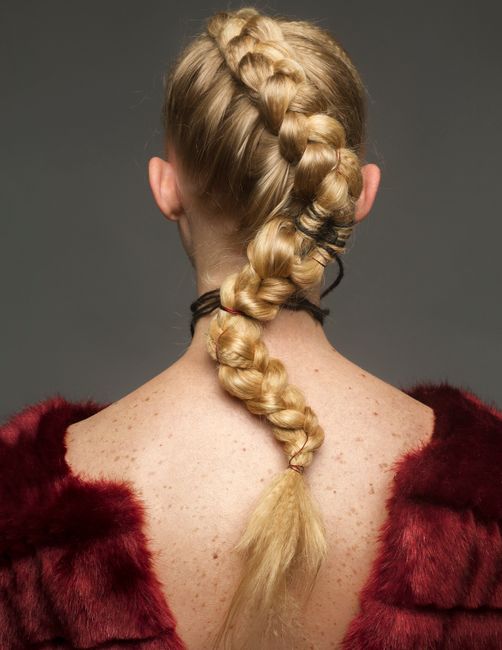
Expanding on the classic, the Dutch braid, also known as an inside-out or reverse French braid, offers a dramatically different aesthetic. Instead of crossing the strands over each other, in a Dutch braid, you cross them under. This seemingly minor adjustment creates a braid that stands out from the scalp, giving it a raised, three-dimensional, and often bolder appearance. The technique is identical to the French braid, with the crucial difference being the direction of the cross-over. Start with your three initial strands. Take the left strand and cross it under the middle strand. Then, take the right strand and cross it under the new middle strand. As you prepare to cross the left strand under again, gather a small section of unbraided hair from the left side and add it to the left strand before crossing it under the middle. Repeat this process on the right side, incorporating hair from the right before crossing that strand under. The result is a braid that pops, creating a more textured and visually impactful effect. Dutch braids are perfect for making a statement, adding a unique flair to any hairstyle. They are particularly effective when used as accent braids or when creating multiple braids for a more intricate look. The raised nature of the Dutch braid can also make fine hair appear thicker, as the braid itself creates visual volume. This technique is a favorite for festival hairstyles, adding an edgy and bohemian vibe.
The sheer versatility of French braiding is evident in the multitude of ways it can be incorporated into different styles. Two French braids, a classic childhood style, has evolved into a sophisticated look for all ages. This involves dividing the hair down the center of the head and executing a French braid on each side. The placement and tightness of these braids can alter the overall look significantly. Tighter, closer-to-the-scalp braids offer a neat and structured appearance, while looser, more voluminous braids can exude a relaxed, bohemian charm. For a more edgy take, consider creating Dutch braids as your two side braids. This adds the raised texture and bold statement of the Dutch braid to a familiar style. The symmetry of two French braids also offers a balanced and polished aesthetic, suitable for everything from a casual day out to a more formal event. They are particularly effective at taming thick or unruly hair, providing a secure and stylish solution.
Beyond simple side-by-side braids, French braiding opens up a world of intricate updos and elegant half-up, half-down styles. A French braid crown, or halo braid, is a supremely elegant and sophisticated option. This involves starting a French braid at the nape of the neck or at one temple, then continuously braiding upwards and around the head, incorporating hair as you go, until the entire head is encased in a beautiful braided halo. This style is perfect for formal occasions, weddings, or any event where you want to exude timeless grace. The key to a successful French braid crown is to maintain even tension and to carefully place the braid so it lays smoothly against the scalp, creating a seamless crown effect. For those with shorter hair, a partial French braid crown can still be achieved by braiding from one temple to the other, then securing the ends.
The French braid ponytail offers a practical yet stylish upgrade to a basic ponytail. Instead of simply tying all the hair back, you begin by French braiding a section of hair from the crown or hairline down towards the nape of the neck. This braided section is then incorporated into the ponytail, either by braiding it around the base of the ponytail or by continuing the braid all the way down the tail of the ponytail itself. This technique not only adds a decorative element but also helps to keep flyaways at bay and provides a more polished finish to a casual ponytail. A variation is the French braided low bun, where the French braid is incorporated into a low bun at the nape of the neck, creating a sophisticated and elegant updo.
For those seeking a softer, more romantic look, half-up, half-down French braids are an excellent choice. This can involve creating a single French braid starting from the front hairline and braiding back to meet the rest of the hair, which is then left down. Alternatively, two smaller French braids can be created on each side of the head, meeting in the back to secure the top section of hair. This style beautifully showcases the texture of loose waves or curls while keeping the face-framing pieces neatly in place. The added texture and visual interest of the braid elevate this classic half-up, half-down style to something more refined.
The intricate nature of French braiding also lends itself to more elaborate and artistic creations. French braid accents are a fantastic way to add a touch of detail and flair to any hairstyle. This can involve creating a small French braid along the hairline, as a decorative element at the nape of the neck, or woven into a ponytail or bun. These subtle additions can transform a simple hairstyle into something more eye-catching and unique. Consider a single, delicate French braid woven through loose waves for a bohemian touch, or a series of thin French braids along the parting for a more structured and edgy look.
The versatility of French braids extends to various hair lengths and textures. While longer hair offers more braiding material, shorter hair can still achieve beautiful French braid styles. For those with shoulder-length hair, a French braid that starts at the crown and ends at the nape of the neck can create a chic and polished look. Micro-French braids are also a popular trend, involving braiding very small sections of hair for an intricate and textured effect. This can be achieved on various hair lengths, adding a unique detail. For individuals with textured or curly hair, French braiding can be an excellent way to manage and style their hair, creating defined braids that showcase the natural texture. It’s important to note that when braiding textured hair, using a good quality styling cream or gel can help to create smoother, more defined braids.
When it comes to achieving salon-worthy French braids, a few essential tools and techniques can make a significant difference. A good quality comb for sectioning, hair ties that match your hair color for a seamless look, and a light-hold hairspray to tame flyaways are all valuable. Patience is also a key ingredient, especially when first learning. Start with the basic French braid, focusing on consistent tension and the proper incorporation of new hair. Watching tutorials and practicing regularly will significantly improve your braiding skills. For those struggling to reach the back of their head, a set of handheld mirrors can be invaluable. Don’t be afraid to experiment with different tensions – a tighter braid will offer more hold, while a looser braid will have a softer, more romantic feel. For those with very fine hair, teasing the sections before braiding can add volume and make the braid appear fuller. Conversely, for those with thick hair, ensuring even sections are incorporated is crucial to avoid an uneven or bulky braid.
The enduring appeal of French braids lies in their ability to adapt to any occasion and personal style. From the practical needs of an athlete to the elegant requirements of a wedding guest, the French braid offers a sophisticated and secure solution. Its intricate weaving technique not only creates a beautiful visual effect but also provides excellent hair management. By understanding the fundamental principles and exploring the numerous variations, anyone can unlock a universe of stylish and elegant French braided hairstyles, transforming their hair into a statement of personal artistry. The journey of mastering French braids is one of continuous discovery, revealing new possibilities with each practice session and inspiring creative exploration within the realm of hairstyling. Whether aiming for a subtle enhancement or a dramatic transformation, the French braid remains a testament to the power of simple techniques to create profound beauty.
