
Daddies Playing With Their Babies
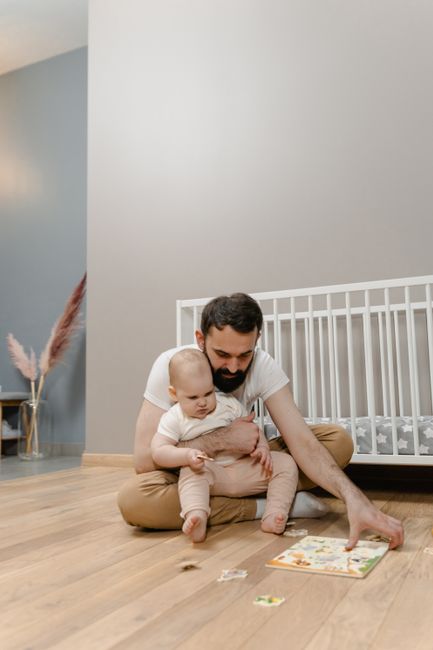
The Indispensable Role of Dads: Fostering Development Through Play
The involvement of fathers in a baby’s life, particularly through active play, is not merely a sentimental ideal but a critical component of healthy infant development, impacting cognitive, social, emotional, and physical growth. Far from being passive observers or auxiliary caregivers, fathers initiate unique play styles that challenge and stimulate babies in ways that differ from maternal interactions, contributing to a richer and more multifaceted developmental experience. This article explores the profound significance of daddies playing with their babies, detailing the specific benefits and offering practical insights for maximizing engagement.
One of the most significant areas where fathers excel in play is in promoting physical development and gross motor skills. Dads are often more inclined towards boisterous, physically engaging activities. Think of the classic “airplane” game, where a father might lift and gently toss his baby, or the playful bouncing and rocking that encourages vestibular stimulation. These actions, while seemingly simple, are crucial for building muscle strength, developing balance, and refining coordination. The proprioceptive input – the sense of the body’s position in space – that babies receive during these energetic interactions is vital for developing body awareness and confidence in movement. As babies progress, fathers can introduce more complex physical challenges, such as encouraging crawling over obstacles, assisting with standing and cruising, and eventually, walking. The inherent physical risk involved in some of these play scenarios, managed by a watchful father, helps babies learn about their physical capabilities and the boundaries of their environment, fostering resilience and adventurousness. Furthermore, this physical engagement can help babies burn excess energy, contributing to better sleep patterns, which benefits both the baby and the entire family. The simple act of a dad holding his baby in different positions, engaging in gentle rough-and-tumble play, or even just walking around the house, provides constant sensory input and encourages the baby to explore their motor potential.
Beyond the physical, daddies’ play is instrumental in shaping a baby’s emotional and social intelligence. Fathers often introduce a higher level of novelty and unpredictability into play, which can help babies develop coping mechanisms for uncertainty and a greater tolerance for frustration. While mothers might offer more consistent, soothing interactions, fathers are frequently the ones who push the boundaries slightly, leading to moments of surprise and excitement. This can manifest as peek-a-boo with a dramatic reveal, a sudden funny noise, or a gentle, playful “chase.” These interactions teach babies about social cues, turn-taking, and the ebb and flow of communication. The playful teasing and exaggerated facial expressions common in father-baby play help infants learn to interpret emotions and develop empathy. When a father playfully “roars” like a lion, the baby learns to distinguish between playful aggression and genuine threat, a critical skill for social navigation. The secure attachment formed through consistent, positive play experiences with a father builds a foundation of trust and emotional security, enabling the baby to explore the world with greater confidence and to form healthy relationships later in life. This emotional security is not solely about feeling safe; it’s also about learning to regulate emotions, to express joy, frustration, and surprise in a safe and supported environment.
Cognitively, the distinct play styles of fathers offer significant advantages. The more challenging and less predictable nature of father-led play can foster problem-solving skills and cognitive flexibility. Fathers might present toys in novel ways, encourage exploration of cause-and-effect relationships (e.g., shaking a rattle to make a sound), or engage in interactive games that require the baby to anticipate the next step. These interactions stimulate neural pathways and promote executive functions like attention, impulse control, and working memory. The higher-pitched vocalizations and more exaggerated intonations often employed by fathers during play can also be particularly effective in capturing a baby’s attention and facilitating language acquisition. When a dad enthusiastically describes an action or labels an object during play, the baby is exposed to rich linguistic input in a highly engaging context. The act of consistently engaging in play also reinforces the understanding of object permanence and the concept of consistent presence, crucial developmental milestones. Furthermore, father-child play has been linked to the development of creativity and imagination, as fathers may introduce more abstract concepts and encourage imaginative scenarios.
The unique interactional style of fathers is often characterized by a greater emphasis on exploration and less on direct instruction. While mothers might be more inclined to guide and direct play, fathers often allow babies more autonomy, encouraging them to discover and experiment independently. This can lead to enhanced self-efficacy and a stronger sense of agency in the infant. The father’s willingness to let the baby take the lead in the play activity, while still providing a safe and supportive framework, allows for the development of intrinsic motivation and a love for learning. This hands-off yet attentive approach fosters a sense of competence and encourages the baby to take calculated risks, which is essential for developing independent thinkers. The father’s role in offering a slightly different perspective on the world, through his unique play, also broadens the baby’s understanding and adaptability.
Practical strategies for daddies to maximize their play engagement are readily available and focus on consistency, responsiveness, and embracing their natural inclinations. The most effective play is often spontaneous and responsive to the baby’s cues. Observing the baby’s interests – what they are looking at, reaching for, or vocalizing about – and engaging with that interest is paramount. Even during routine activities like diaper changes or bath time, fathers can incorporate playful elements, such as making funny faces, singing songs, or using bath toys to create engaging sensory experiences. Introducing a variety of age-appropriate toys and objects can also stimulate different aspects of development. Soft blocks for stacking and knocking down, cause-and-effect toys, and simple puzzles can all be used to encourage cognitive exploration. Reading books together, even for very young infants, is an invaluable way to foster language development and a love for stories. Fathers can make reading more interactive by using different voices for characters, pointing to pictures, and asking simple questions.
The importance of father-child play extends beyond the infant years and lays a crucial foundation for future parent-child relationships. The positive experiences and strong bond forged through early play translate into greater parental involvement, improved communication, and a more harmonious family dynamic as the child grows. This early engagement helps fathers develop confidence in their parenting abilities and strengthens their connection with their child, making them more likely to remain actively involved in all aspects of their child’s life. The consistent presence of an engaged father provides a powerful role model, demonstrating healthy relationship dynamics and the importance of emotional expression.
In conclusion, daddies playing with their babies is a cornerstone of healthy infant development, offering a unique and invaluable contribution to a child’s physical, cognitive, social, and emotional well-being. The energetic, novel, and exploratory nature of father-led play challenges babies, builds resilience, fosters independence, and cultivates crucial life skills. Prioritizing and encouraging this paternal engagement is not just beneficial; it is an essential investment in a child’s lifelong success and happiness. The benefits are multifaceted, impacting motor skills, emotional regulation, cognitive growth, and the very fabric of the parent-child bond, setting a trajectory for a well-rounded and confident individual. This active, engaged participation from fathers is a powerful force shaping the future generation.
