
Will It Sink Or Float
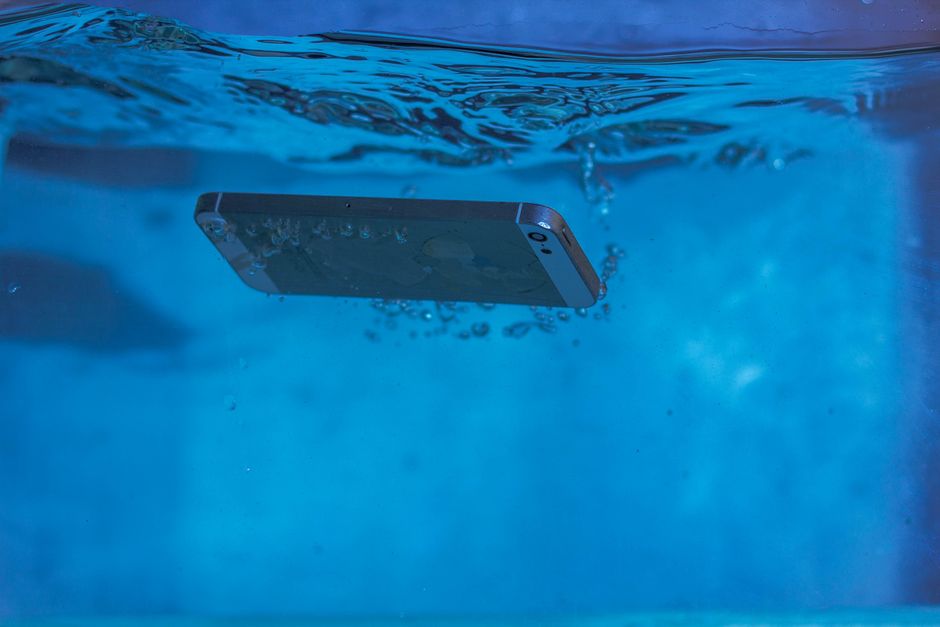
Will It Sink or Float? Understanding Buoyancy and Density in Everyday Objects
The fundamental question of whether an object will sink or float is a common point of curiosity, especially for children and in early science education. This seemingly simple query delves into the complex and fascinating principles of physics, specifically buoyancy and density. Understanding these concepts unlocks the secret behind why a massive ship can glide effortlessly across the ocean while a small pebble plummets to the seabed. This article will explore the science behind sinking and floating, providing an in-depth SEO-friendly guide for anyone seeking to understand this universal phenomenon.
The core principle governing whether an object sinks or floats is density. Density is a measure of how much mass is contained within a given volume. It’s calculated by dividing an object’s mass by its volume: Density = Mass / Volume. Objects with a higher density than the fluid they are placed in will sink, while objects with a lower density will float. The fluid in question is typically water, but this principle applies to any liquid or gas. For example, helium is less dense than air, which is why helium balloons float.
To illustrate, consider a small pebble and a large log. The pebble, though small, is very dense. Its mass is packed tightly into a small volume. The log, on the other hand, is much larger but made of wood, which has a relatively low density compared to water. When the pebble is placed in water, its density is greater than that of water, so it sinks. The log, being less dense than water, displaces a volume of water whose weight is equal to the log’s weight, causing it to float.
Buoyancy is the upward force exerted by a fluid that opposes the weight of an immersed object. This force, often referred to as the buoyant force, is directly related to the amount of fluid an object displaces. The principle of buoyancy, famously attributed to the Greek mathematician Archimedes, states that the buoyant force on an object submerged in a fluid is equal to the weight of the fluid displaced by the object. This is a crucial concept for understanding why larger, heavier objects can float.
Imagine an object submerged in water. The water molecules push upwards on the object from all sides. The net effect of these upward forces is the buoyant force. If this buoyant force is greater than or equal to the object’s weight, the object will float. If the buoyant force is less than the object’s weight, the object will sink. The weight of the object is determined by its mass and the acceleration due to gravity.
The relationship between density and buoyancy is intrinsically linked. An object will float if its average density is less than the density of the fluid. Conversely, it will sink if its average density is greater than the density of the fluid. If the densities are equal, the object will be neutrally buoyant, meaning it will neither sink nor float but remain suspended at its current depth.
Factors Influencing Sinking and Floating:
Several factors contribute to whether an object sinks or floats, all stemming from the fundamental principles of density and buoyancy:
-
Material Composition: Different materials have vastly different densities. Metals like iron and lead are very dense, causing them to sink. Woods, plastics, and certain types of foam are less dense and tend to float. This is why a solid steel ball sinks, but a hollow steel container can float. The average density of the steel ball is high, while the average density of the hollow container (including the air inside) is significantly lower.
-
Shape and Volume: While density is the primary factor, an object’s shape can influence its effective density in a fluid. A flat, wide object will displace more water for the same mass than a compact, dense object. This is why a boat, often made of dense materials like steel, can float. Its hull is designed to maximize the volume of water displaced. The air trapped within the hull significantly reduces the boat’s overall average density. This is a key concept in naval architecture.
-
Porosity and Air Pockets: Objects that are porous or contain trapped air pockets have a lower average density. For example, a dry sponge can float, but once saturated with water, it becomes much denser and will sink. The air pockets in the dry sponge contribute to its low average density. Similarly, a piece of pumice rock, which is volcanic rock with trapped air bubbles, floats on water.
-
Temperature of the Fluid: The density of fluids, including water, changes with temperature. Water is most dense at about 4 degrees Celsius. As water cools further towards freezing or heats up, its density decreases. This subtle change can impact buoyancy, though it’s usually a minor factor compared to the object’s intrinsic density.
-
Salinity of the Fluid: Saltwater is denser than freshwater because the dissolved salt adds mass to the water without significantly increasing its volume. This means that an object that floats in freshwater might sink in saltwater, and vice-versa if the object’s density is very close to that of freshwater. This is why it’s easier to float in the ocean than in a freshwater lake. The increased density of saltwater provides a greater buoyant force.
Demonstrating Sinking and Floating: Everyday Experiments
The principles of sinking and floating can be easily demonstrated with common household items, making them excellent educational tools.
-
The Water Challenge: Gather a variety of objects such as a coin, a feather, a rubber duck, a wooden block, a grape, a piece of plastic, a metal spoon, and a small apple. Fill a basin or tub with water and have participants predict whether each object will sink or float before placing it in the water. This simple experiment allows for hands-on exploration of density and buoyancy. Discuss the results and relate them back to the density of each object and the water.
-
The Orange Experiment: A fascinating demonstration involves an unpeeled orange and a peeled orange. An unpeeled orange will float, while a peeled orange will sink. The peel of the orange is filled with small air pockets, making its average density lower than that of water. Once peeled, the orange’s density becomes higher than water, causing it to sink. This highlights the role of trapped air in buoyancy.
-
The Saltwater vs. Freshwater Demonstration: Use two identical containers of water. In one, dissolve a significant amount of salt. Then, take an object like an egg. The egg will sink in freshwater but float in saltwater. This clearly illustrates how the density of the fluid affects buoyancy.
-
The Clay Boat: Take a lump of modeling clay. If you roll it into a ball, it will sink. However, if you shape the same amount of clay into a boat-like hull, it will float. This demonstrates the importance of shape in displacing water and reducing the average density of the object. The hollow space within the clay boat traps air, increasing its volume without adding significant mass, thus reducing its average density.
Applications of Buoyancy and Density:
The understanding of sinking and floating has profound implications across numerous fields:
-
Naval Architecture and Shipbuilding: The design of ships, submarines, and other watercraft relies heavily on buoyancy. Engineers meticulously calculate the displacement of water required to support the immense weight of vessels. Submarines, for instance, can control their buoyancy by taking on or expelling water from ballast tanks, allowing them to submerge or surface.
-
Aerospace Engineering: While buoyancy in gases is less intuitive, it’s critical for lighter-than-air craft like balloons and airships. The principle is the same: a gas with a lower density than the surrounding air will rise.
-
Marine Biology: Many marine organisms have evolved mechanisms to control their buoyancy, enabling them to navigate different depths and conserve energy. Fish, for example, use swim bladders, gas-filled sacs that they can adjust to alter their overall density.
-
Hydrometers: These instruments are used to measure the density of liquids. They work on the principle of buoyancy. A hydrometer with a weighted bulb and a calibrated stem will sink to different levels in liquids of varying densities. The higher it floats, the denser the liquid.
-
Material Science and Manufacturing: Understanding density is crucial in selecting materials for specific applications. For example, in the aerospace industry, lightweight yet strong materials are essential to reduce fuel consumption, a direct application of optimizing density for flight.
Overcoming the Density Barrier: Ingenious Designs
The most compelling examples of sinking and floating involve objects that, by their material alone, should sink but are ingeniously designed to float. The most prominent example is the ship. A modern cargo ship can weigh hundreds of thousands of tons. Steel, its primary construction material, is approximately 7.85 times denser than water. So, how can it float?
The answer lies in the shape and the air within the hull. A ship’s hull is essentially a large, hollow container. When a ship floats, it displaces a volume of water whose weight is exactly equal to the ship’s total weight. The vast interior of the hull is filled with air, which is significantly less dense than water. This trapped air, combined with the large volume the hull occupies, dramatically reduces the average density of the entire ship. Therefore, even though the steel itself is dense, the ship as a whole system, including the air within its structure, has an average density lower than that of seawater, allowing it to float.
Similarly, icebergs float because, although frozen water is slightly less dense than liquid water, they are still denser than the surrounding ocean. The key is that only about 90% of an iceberg is submerged, with the remaining 10% visible above the surface. This illustrates that even dense objects can float if their average density is slightly less than the fluid.
Common Misconceptions and Nuances:
-
"Heavy things sink, light things float": This is an oversimplification. A ton of feathers is heavier than a pound of lead, yet the feathers would float while the lead would sink. It’s not just about weight; it’s about density and the interaction with the fluid.
-
Size is everything: A large, hollow plastic ball floats, while a tiny, dense metal ball sinks. Size matters in terms of displacement, but density is the fundamental determinant.
-
All metals sink: While many metals are dense and sink, some lighter metals like aluminum can be fashioned into buoyant structures. Furthermore, the concept of alloys can alter densities.
Conclusion
The question of will it sink or float is a gateway to understanding the fundamental principles of density and buoyancy. Density, the measure of mass per unit volume, dictates an object’s inherent tendency to sink or float. Buoyancy, the upward force exerted by a fluid, counteracts an object’s weight. When the buoyant force equals or exceeds an object’s weight, it floats. The interaction between an object’s density and the density of the fluid, along with its shape and internal structure (particularly trapped air), determines the outcome. From the smallest pebble to the largest ocean liner, the laws of physics governing sinking and floating are consistently at play, shaping our world and inspiring innovation. This deep dive into the science behind this everyday phenomenon reveals a universe of intricate relationships and practical applications, underscoring the power of scientific inquiry in explaining the seemingly simple observations of our daily lives.
